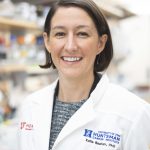
White blood cells protect us from infection by fighting bacteria and viruses. When we get sick, these cells create inflammation to help us kill germs. Inflammation can make us feel achy, tired, and feverish, but it is a sign that our immune systems are working. Once the infection is gone, the inflammatory response stops and we feel better.Leukemias are cancers of white blood cells. Our group studies a rare leukemia called chronic myelomonocytic leukemia (CMML). People with CMML have inflammation even when they do not have an infection. As a result, many patients feel like they have the flu all the time. Common symptoms of CMML include fatigue, fevers, night sweats, and weight loss. We believe that decreasing inflammation in the body may help CMML patients feel better and live longer.We have found that a type of white blood cell called a neutrophil may be an important source of abnormal inflammation in CMML. Neutrophils release sticky webs made of DNA and proteins. These webs are called neutrophil extracellular traps, or NETs. In healthy people, neutrophils produce NETs to trap germs when they are sick. CMML patients produce large amounts of NETs even when they are not sick with an infection. Our group has discovered a protein called neonatal NET inhibitory peptide, or nNIF, that blocks NET formation. In this project, we will test whether nNIF can lower NET levels in a mouse model of CMML. We believe that reducing NETs will also reduce inflammation. If successful, this work could lead to new treatments that improve the lives of people with CMML.
Funded by the Stuart Scott Memorial Cancer Research Fund
Cancer immunotherapy, which uses a patient’s own immune system to fight cancer, has been very successful for some patients. But not everyone benefits. The immune system is made up of both immune cells that are both “good” and “bad” at fighting cancer. T cells are important “good” cells because they can kill cancer cells. Macrophages, however, can limit how well T cells can kill. Our lab studies how immune cells respond to cancer. In particular, we are interested in how different regions of the same tumor can have different immune cells in them. This means that some regions can have a good immune response, while at the same time, other regions have a bad response. We want to understand how the “bad” immune response regions form and how to fix them. We have identified a molecule called Cx3cl1 that some tumor cells make, which attracts “bad” macrophages. In this project, we will use a model system to study how Cx3cl1 interacts with macrophages. We will study areas of a tumor that have lots of Cx3cl1, and what happens to them when the tumor is treated with immunotherapy. We will also look at Cx3cl1, “bad” macrophages and “good” T cells in different regions of patient tumors. Our ultimate goal is to bring a “good” immune response to all regions of a tumor, so that immunotherapy will work better.
More than 70% of adults in the USA are obese or overweight. Obesity is a known risk factor for 13 types of cancer. This includes postmenopausal breast cancer. Breast cancer is the second most common cancer among women in the USA. It affects 1 in 8 women and leads to more than 40,000 deaths a year. Obesity is associated with a 30-50% increase in breast cancer incidence.
The expanded fat pad in obese patients surrounds breast cancer cells and supports cancer growth. However, we do not yet understand how the presence of breast cancer cells changes the surrounding fat pad, and how this, in turn, supports cancer growth. We propose that there is a reciprocal cross-talk between breast cancer cells and the cells of the surrounding fat pad, and that breast cancer cells secrete factors to generate tumor-supporting cells.
Our goal is to identify these secreted factors using functional studies and mass spectrometry approaches. We will investigate the underlying mechanism of how these factors change the fat pad. Finally, we will determine the functional importance of these changes to breast cancer cell growth. We envision that our discoveries will have a major impact on obese and overweight women at elevated risk of breast cancer. In the immediate future, our discoveries highlighting the dangerous cross-talk between breast cancer cells and the surrounding obese fat pad could lead to dietary interventions and weight-loss counseling. Long-term, we are excited by the possibility that our discoveries will lead to novel screening and therapeutic strategies.
Pancreatic cancer is an awful disease that kills about 50,000 people a year and is going to be the second most common reason people die of cancer in 2025. We have few treatments for pancreatic cancer that do not work very well and can make patients sick. More treatments for pancreatic cancer that shrink the cancer tumors and do not make patients sick are needed now. Our studies have shown that combining two pills, trametinib and hydroxychloroquine, shrink pancreatic cancer tumors in mice, as well as, in a pancreatic cancer patient. In addition, our previous clinical trial has shown that this combination of pills is easier for patients to take and does not make them sick in a small number of patients. We would like to now see whether the combination of trametinib and hydroxychloroquine pills shrinks pancreatic cancer tumors and leads to a longer life in more pancreatic cancer patients. If our study is successful it might allow for a treatment for pancreatic cancer patients that will make them live longer lives and not cause them to become sick.
Basal (BCC) and squamous cell (SCC) carcinomas are the most common form of skin cancer. If diagnosis is delayed, the tumors may require surgery that is more extensive. These tumors may be superficial, which are slow-growing, confined to the outer skin layers, and can usually be treated without surgery. Alternatively, they may be invasive, penetrating the deeper skin layers to destroy these tissues, often requiring surgery that can be costly and painful. While these skin cancers often may be diagnosed with the naked eye, it is difficult to tell whether they are superficial or invasive. Thus, there is a clear need for a new diagnostic approach that can inform patients and their physicians whether a particular lesion should be biopsied, and whether evaluation is urgent if the lesion is likely to be invasive. Currently there is no non-invasive (without biopsy) to accomplish this. Here, we propose to develop a new test based on micro-RNAs (miRNAs) that can be recovered simply on adhesive tape from suspicious skin lesions. We believe these miRNAs can be used to identify non-melanoma skin cancers and their subtypes as a new non-invasive way to decide whether (and how urgent) a biopsy needs to be performed. First, we will determine which miRNAs are most associated with superficial and invasive skin cancers by analyzing miRNAs in previously biopsied tissues. Second, we will validate this technique on a group of patients who come to clinic with a suspicious skin lesion.
Cancer is a problem of uncontrolled cell growth. Either too many new cells are being born or not enough old cells are dying. Cellular senescence is a normal aging process in which cells stop growing. However, these cells remain metabolically active and secrete factors to attract immune cells and increase inflammation. This process occurs naturally during aging due to different types of stress that build up over time. Senescence was first thought to protect against cancer since it prevents new cells from being made. In fact, many drugs currently used to treat human cancer patients block tumor growth by turning on senescence. However, more recent studies have shown that some tumor cells can eventually escape this process and start growing again. Cells that exit senescence may even grow faster and spread more easily than before. Given these new findings about the ‘dark side’ of senescence, there has been growing interest in using anti-aging drugs to treat cancer. However, this process is complex and has been difficult to study in the lab. We created a new mouse model of adrenocortical carcinoma (ACC), which is a deadly cancer that starts in the adrenal gland and has no effective treatments. Our model develops adrenal cancer, but only after an extended period of senescence. This model provides a unique opportunity to study the relationship between aging and cancer. Using this system, our goal is to (1) study the long-term effects of senescence on tumor growth, and (2) test anti-aging drugs as cancer therapy.
Supported by Bristol-Myers Squibb through the Robin Roberts Cancer Thrivership Fund
Ovarian cancer is a leading cause of cancer death among US women, with about 50% of women dying from their disease within five years. Treatments including surgery and chemotherapy are meant to cure the cancer, butin about 50% of women, the cancer will come back.
Black and Hispanic women are more likely to stop treatment early, and to die from their disease than non-Hispanic white women. These differences arereferred to as race/ethnic disparities. There are many reasons for disparities,including differences in access and quality of medical care. Black and Hispanic women are also more likely to have other health conditions (i.e. comorbidities), likeheart disease or diabetes, when they are diagnosed with ovarian cancer. These comorbiditiesmaychange a patient’s ability to tolerate treatment, and in turn, may reduce theirsurvival. Comorbidities may also change the biology of the tumor. Looking at tumor markers may provide information on response to treatment and survival of the patients.
The goal of this project is to understand race/ethnic disparities in ovarian cancer treatment, recurrence, and mortality. In this project, we will examine how comorbidities and tumor markers differ in a diverse group of ovarian cancer patients.This study will take place using data from the Kaiser Permanente Healthcare system. This research project will provide information for doctors about how health conditions can affect a woman’s response to treatment, so that she can get better cancer care, and help to reduce disparities in ovarian cancer treatment and outcomes.
Funded through the Stuart Scott Memorial Cancer Research Fund by the Ayodele family in memory of Ade Ayodele
Colorectal cancer (CRC) is preventable when detected early. Because of effective screening, fewer Americans aged 50 and older are now being diagnosed with CRC or dying from it. Over the past 20 years, however, the number of Americans under age 50 who are diagnosed with CRC has doubled. Health experts estimate that the numbers of younger Americans with CRC will continue to increase rapidly over the next 10 years. The reasons for this increase are poorly understood. In addition, younger people are less likely to be diagnosed with CRC when the disease is still at an early stage. Also, of concern is that among men and women of all ages and all races, African-American men are the most likely to die of CRC.
The goal of this study is to better understand the reasons why people under age 50 in Utah are being diagnosed with CRC. As a first step, the researchers plan to identify the specific places in Utah where diagnoses of CRC among younger people are increasing the most. Next, they plan to conduct 1-hour recorded Zoom interviews over phone and/or video with 20 people who live in these places and were diagnosed with CRC when they were under age 50. Thirdly, the researchers plan to create and test a program that will raise Utahns’ awareness of the increasing risk of CRC among residents of the state who are aged under 50. This study is unique as CRC survivors are key to helping drive the study forward.
Acute myeloid leukemia (AML) has the most dismal prognosis of all blood cancers, and >70% of AML
patients will succumb to their disease. Therapy is still based on a chemotherapy regimen developed more
than three decades ago and what little progress has been made is attributable to improvements in
supportive care. Although most patients initially respond to therapy, leukemia stem cells survive in
sanctuary sites of the bone marrow and eventually cause relapse and death. Intense research has identified the major DNA mutations in AML, but this knowledge has not led to therapeutic breakthroughs. To overcome this stalemate, our translational medicine research team has taken a function-first approach to identify vulnerabilities in AML cells that are independent of genetic mutations and continue despite protection afforded by the bone marrow. We discovered that cells from most AML patients are highly dependent on SIRT5, an enzyme that regulates energy metabolism, while normal controls are not dependent on SIRT5. As no clinical SIRT5 inhibitors exist, these results prompted us to conduct a search for new SIRT5 inhibitors. We identified a highly promising candidate (HCI-0250) as the starting point for the development of a clinical SIRT5 inhibitor. We will validate SIRT5 as a therapy target in AML using mouse models reflecting key aspects of the clinical disease. In parallel, we will develop a potent and selective SIRT5 inhibitor as a candidate for clinical trials in AML. If successful, our work may lead to a new treatment paradigm applicable to a majority of AML patients.
To provide the best experiences, we use technologies like cookies to store and/or access device information. Consenting to these technologies will allow us to process data such as browsing behavior or unique IDs on this site. Not consenting or withdrawing consent, may adversely affect certain features and functions.
Functional
Always active
The technical storage or access is strictly necessary for the legitimate purpose of enabling the use of a specific service explicitly requested by the subscriber or user, or for the sole purpose of carrying out the transmission of a communication over an electronic communications network.
Preferences
The technical storage or access is necessary for the legitimate purpose of storing preferences that are not requested by the subscriber or user.
Statistics
The technical storage or access that is used exclusively for statistical purposes.The technical storage or access that is used exclusively for anonymous statistical purposes. Without a subpoena, voluntary compliance on the part of your Internet Service Provider, or additional records from a third party, information stored or retrieved for this purpose alone cannot usually be used to identify you.
Marketing
The technical storage or access is required to create user profiles to send advertising, or to track the user on a website or across several websites for similar marketing purposes.
To provide the best experiences, we use technologies like cookies to store and/or access device information. Consenting to these technologies will allow us to process data such as browsing behavior or unique IDs on this site. Not consenting or withdrawing consent, may adversely affect certain features and functions.
Functional
Always active
The technical storage or access is strictly necessary for the legitimate purpose of enabling the use of a specific service explicitly requested by the subscriber or user, or for the sole purpose of carrying out the transmission of a communication over an electronic communications network.
Preferences
The technical storage or access is necessary for the legitimate purpose of storing preferences that are not requested by the subscriber or user.
Statistics
The technical storage or access that is used exclusively for statistical purposes.The technical storage or access that is used exclusively for anonymous statistical purposes. Without a subpoena, voluntary compliance on the part of your Internet Service Provider, or additional records from a third party, information stored or retrieved for this purpose alone cannot usually be used to identify you.
Marketing
The technical storage or access is required to create user profiles to send advertising, or to track the user on a website or across several websites for similar marketing purposes.