
Skip to content
The V Foundation logo
Donate
  • About Us
  • Stories
  • Research
  • Events & Fundraisers
  • How to Help
  • Donate
  • Home
  • About Us
    • About Us
    • Our Story
    • Leadership & Collaboration
    • Financial Responsibility
    • Partners
    • Diversity, Equity & Inclusion
    • Careers
  • Stories
    • All
    • Inspiration
    • News
    • Team Science
    • V Ambassadors
    • Video & Podcasts
  • Research
    • Research Overview
    • Award Programs
    • Funded Grants
    • Grant Selection Process
    • Special Funds
  • Events & Fundraisers
    • Events & Fundraisers
    • Events Calendar
    • Signature Events
    • Run For Team V
    • Fundraise for the V
    • Fundraising Friends
  • How to Help
    • How to Help
    • Ways to Give
    • Honors and Memorials
    • Shop the V

The Latest

Next Generation of Leaders Accelerate Victory Over Cancer® with $280,000 Raised at Victory Gala in NYC

Read more

A Family Affair: Supporting Cancer Research

Read more

The V Foundation for Cancer Research Announces New Cohort of Translational Grant Recipients

Read more

The 21st Annual Dick Vitale Gala Announces Over $120 Million Raised For The V Foundation’s Dick Vitale Pediatric Cancer Research Fund

Read more
View All

About the Foundation

  • About Us
  • Our Story
  • Leadership & Collaboration
  • Partners
  • Financial Responsibility
  • Diversity, Equity and Inclusion
  • Careers
  • Cookie Policy

How to Help

  • How to Help
  • Ways to Give
  • Honors and Memorials

Research

  • Research Overview
  • Award Programs
  • Grant Selection Process
  • Funded Grants
  • Special Funds
  • Researcher Resources

Stories

  • All
  • Inspiration
  • Team Science
  • V Ambassadors
  • Video & Podcasts
  • News

Events & Fundraisers

  • Events & Fundraisers
  • Events Calendar
  • Signature Events
  • Run For Team V
  • Fundraise for the V
  • Fundraising Friends

For Patients

  • Patient Resources

Tags: Big Ideas|Blog|Featured

Big Ideas: Malachi Griffith, Ph.D.

Big Ideas: Malachi Griffith, Ph.D.

Immunotherapies rely on the body’s ability to recognize cancer cells for what they are – unwelcome invaders that need to be destroyed. To do this, the immune system must be taught how to distinguish between friend and foe, but this can be tricky since cancer cells are genetically similar to healthy cells. Researchers believe that neoantigens – new proteins that form on a cancer cell as a result of certain mutations in tumor DNA – could serve as red flags that help immunotherapies find the right target.
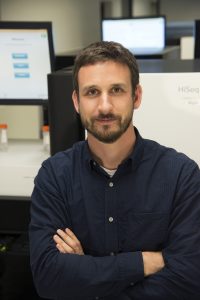
Malachi Griffith, Ph.D., and his team at the Washington University School of Medicine in St. Louis are working on a number of different ways this technique could change the game of cancer treatment.

The big-picture idea Griffith (and many others) are working on is to identify places in the genome that have changed in the tumor and develop ways to use that information to better understand the cancer and how it might be treated.

“Our work is focused on leveraging the amazing capability of our immune system to distinguish something that is foreign, or an invader, from the things that are supposed to be there,” said Griffith. “When a neoantigen is expressed in a tumor cell, it can be detected and attacked. We want to initiate an antitumor therapy within the patient’s own body that would be completely personalized to the unique characteristics of that specific tumor.”

To do this, scientists take a piece of tumor and isolate DNA from it, then sequence that DNA and compare it to normal DNA from the patient. This lets them pinpoint where there have been mutations and look at how the immune system may be able to recognize those changes. This knowledge opens many potential doors for new therapies, such as vaccines that train the immune system to target specific proteins displayed by the tumor cells. Some of these treatments have already shown success in clinical trials.

“It is really the personalized aspect of this,” said Griffith. “The notion that you could develop streamlined and sophisticated pipelines to analyze unique characteristics of a patient’s tumor and then tailor their approach to those specific characteristics is exciting.”

Griffith loved science from an early age. Then, when he was 18, his mother was diagnosed with breast cancer and passed away quickly.

“It wasn’t much more than a year from her diagnosis to her death,” said Griffith. “That was obviously a very traumatic experience during a pivotal point in my education and career development. I started to think about going into research that might be applicable to understanding cancer better.”

After finishing school and launching a research career, Griffith received a V Scholar Grant to pursue his ideas about targeting neoantigens.

“It was fantastic. I was at this stage of coming out from under the wings of my mentors, and I was just starting my independent research program. I had received a career transition award from the NIH, but needed funding for specific research ideas, I didn’t have the preliminary data needed to get more from the NIH,” said Griffith.

The V Scholar award created a bridge to allow me to develop this idea to the point where I could get additional funding and build a larger program.
Malachi Griffith, Ph.D.

That is why we are so committed to the V Scholar initiative. We fund innovative, outside the box thinkers who need a start. Then, after they prove their ideas are worthy, they are able to receive millions more in funding thanks to our initial investment.

This investment in the future of cancer research is only possible thanks to your support. With your help, V-Funded scientists like Griffith will continue to innovate and make critical discoveries. Therapies will continue to improve and save more lives. And we will continue to move closer to Victory Over Cancer®.
Big Ideas: Hector Franco, Ph.D.

Big Ideas: Hector Franco, Ph.D.

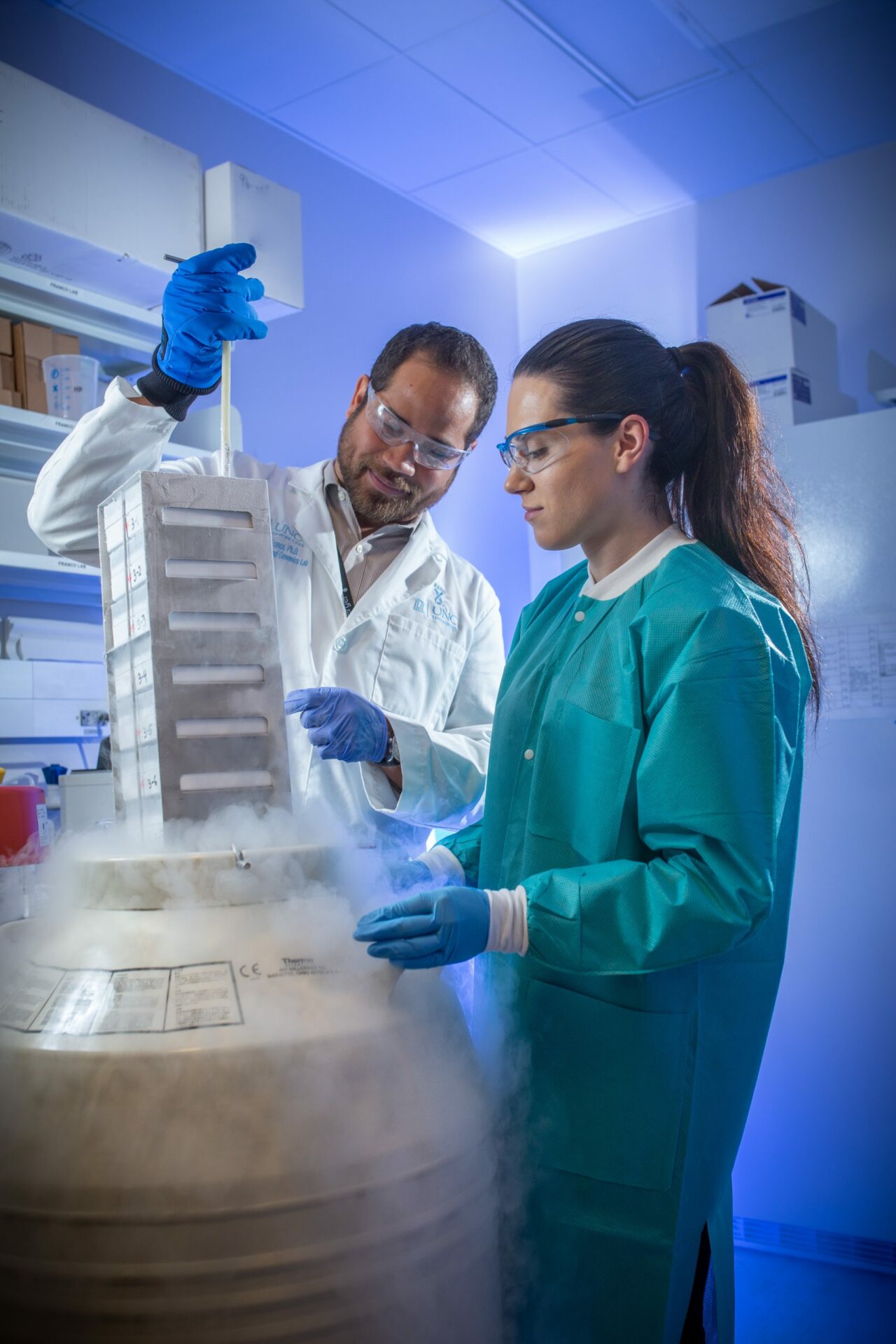
When the first human genome was sequenced back in 2001, the project had taken more than a decade to complete and cost about $1 billion. Today, thanks to advancements in technology and a commitment to funding new research, scientists can sequence a genome in a few hours, for a few thousand dollars. Now, scientists like Hector Franco, Ph.D., are working to harness the power of genomic sequencing to change the game for people with cancer.
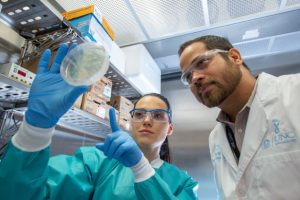
There is still much to learn about how the human genome works, but we do know our DNA contains genetic instructions that our cells use to make proteins, which carry out all the functions that keep us alive. In addition, some parts of the genome, known as regulatory regions, determine when and where these genetic instructions are carried out. When a gene or regulatory region changes, even a little bit, it can lead to cancer. Franco and his team at the UNC Lineberger Comprehensive Cancer Center are using new sequencing technologies to reconstruct this process by tracing exactly where something went wrong to allow a tumor to develop. To start, they’re focusing on ovarian cancer, which has a five-year survival rate of just under 50%.

“We are focused on how to turn on and off genes. By using various genomic sequencing tools, we find the regions of the genome that contain the instructions for turning genes on and off, and figure out which ones of those are mutated in ovarian cancer cells,” said Franco.

Typically, when studying ovarian tumors, researchers have had to sequence tumors as a collection of cells, which makes it more difficult to pinpoint where the cancer-causing mutation started. Now, thanks to new technology known as “single cell sequencing,” Franco and his team can take a closer look at the root causes of cancer.

“When women come to our hospital to have surgery to remove ovarian tumors, we get those tumors from the patients who have donated them to research,” said Franco. “Thanks to this new technology, we have the ability to sequence each individual cell in the tumor and identify the various cell types found. We can look inside each of those cells and see what the DNA and molecular characteristics are.”
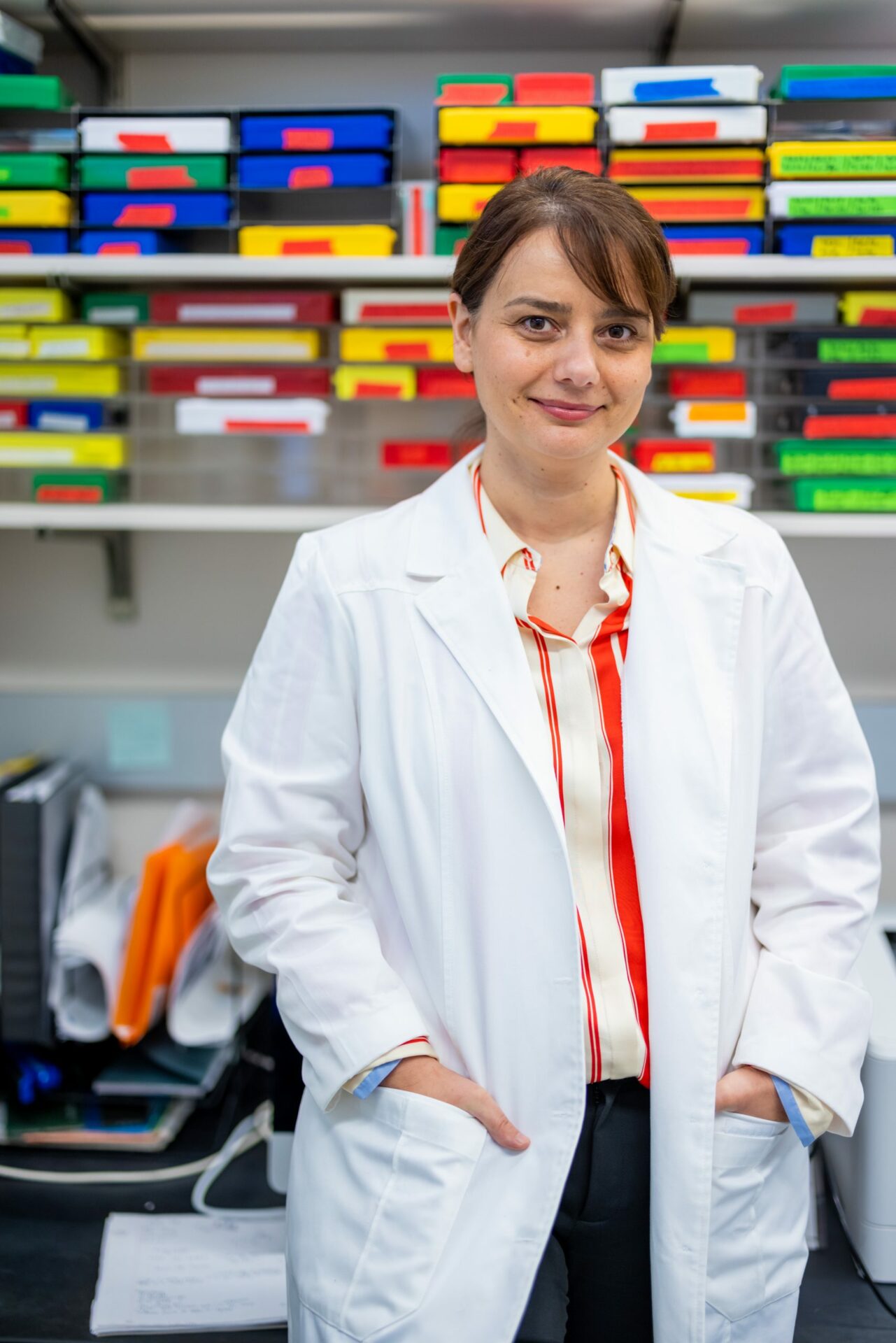
This is exciting work because not only will it impact our general understanding of how the human genome is regulated, but the lessons learned while looking into ovarian cancer also can be applied to other types of cancer. Franco also says these discoveries could lead to more personalized cancer treatments.

“These regions of the genome that contain instructions, which we call regulatory elements, are therapeutically tractable. That means we can design drugs to specifically inhibit these regulatory regions of the genome,” said Franco. “If we know which ones are the bad actors in ovarian cancer, then we can try to fix them or reverse what they are doing inside the cells.”

Read more about Dr. Franco’s V-funded work, recently published in Science Direct: https://www.cell.com/molecular-cell/fulltext/S1097-2765(21)00842-X

Franco’s grant from the V Foundation came from the Stuart Scott Memorial Cancer Research Fund, which looks to fund researchers from underrepresented minorities in the scientific field. Franco knows just how important this type of funding is.

I am a minority scientist. There are not a lot of scientists that look like me. It is sometimes more difficult for underrepresented minorities to obtain funding, and opportunities like this one from the V Foundation are really important to the trajectory of scientists who come from backgrounds like mine.
Hector Franco, Ph.D.

Researchers today have capabilities that would have seemed beyond imagination just a few decades ago. But to truly take advantage of these technological advances requires continued investment and innovative ideas. New ideas lead to more lives saved, and every life saved moves us closer to Victory Over Cancer®.

Big Ideas: Elda Grabocka, Ph.D.

Big Ideas: Elda Grabocka, Ph.D.

When people get tired or stressed, we may grab a quick snack or extra cup of coffee to get through the day. Cancer actually has coping mechanisms, too. As cancer cells grow uncontrollably, they often run low on nutrients and oxygen. To survive in these substandard conditions, they draw on emergency supplies tucked away in particles called stress granules.

Could targeting these stress granules be the ticket to fighting cancer more effectively? V-funded researcher Elda Grabocka, Ph.D., of the Sidney Kimmel Cancer Center at Jefferson University, is working to find out.
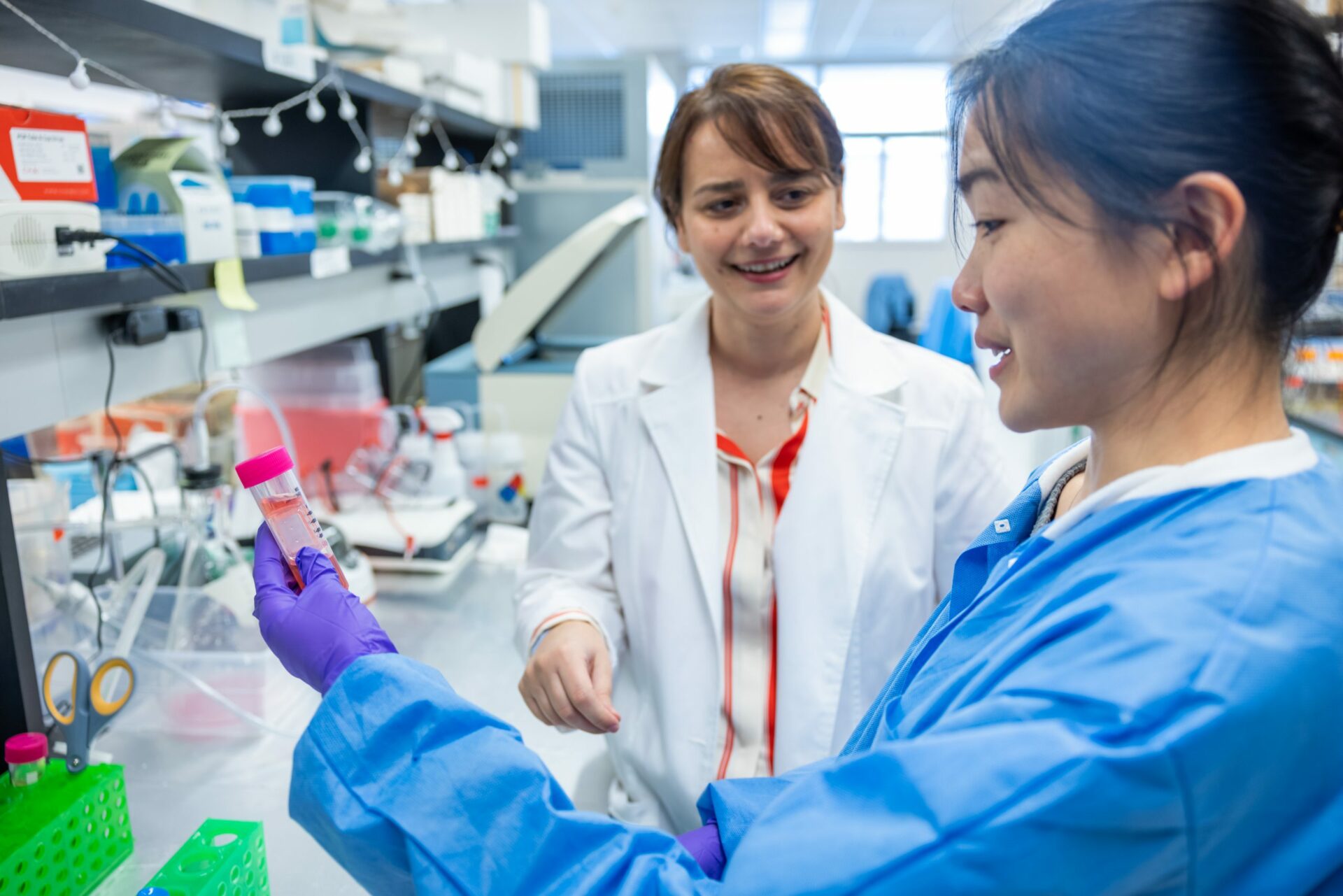
“The potential role of stress granules in helping cancer cells cope with stress has important implications for existing therapeutics,” said Grabocka. “We hope to find out how important stress granules are to the initiation and development of cancer and see if we can improve outcomes by combining existing chemotherapies with approaches to target stress granules.”

In addition to helping cancer cells grow rapidly, stress granules likely play a role in helping cancers resist treatment. Many therapeutics, especially chemotherapy, work by inducing stress in cancer cells. It makes sense that the same coping mechanisms that help them survive rapid growth could also help cancer cells deal with the stress of the treatment.

Grabocka notes that the study of stress granules is still in its early days, and while not much is currently known about them, there is potentially much to gain. Her team is focusing on their role in pancreatic cancer, an extremely aggressive cancer with a poor survival rate.

“The therapeutic options for pancreatic cancer patients are very limited. We have found that pancreatic cancer cells have very high levels of stress granules and are highly dependent on them for survival under stress,” said Grabocka. “This is in large part due to the mutated gene that drives pancreatic cancer, the KRAS oncogene, which we have found can stimulate the cellular capacity to make stress granules.”

This knowledge has Grabocka and her team hopeful that if they can develop a strategy to target these stress granules, they could provide a new treatment option for pancreatic cancer patients. It could also potentially translate to better treatment strategies for other cancers driven by RAS mutations, which account for around 30% of all cancers.

“I think this work could provide a new framework for our understanding of how oncogenic RAS orchestrates tumor growth as well as resistance to therapy,” said Grabocka. “It places stress adaptation as a critical node in these processes. It will be important to identify how to target stress adaptation and how to integrate therapies that target stress adaptation with existing therapies for treatment of mutant RAS cancers.”

As Grabocka’s work continues, it’s important to note that a V Scholar grant in 2017 got her lab started. Because the V Foundation looks to fund new and exciting theories, she was able to receive funding to begin studying this emerging idea.

“It was the very first grant I got when I started my independent laboratory, and it was instrumental to my research. Stress granules are quite new, new enough for me to wonder how traditional funding mechanisms would see my approach,” said Grabocka. “It could have been perceived as too risky or too preliminary. The funding from the V Foundation got our research going, enabled me to get those first key exciting and promising results that we could then utilize as the basis for proposals that were later funded by the National Cancer Institute.”

Thanks to research like that of Grabocka and her team, we continue to move forward with new strategies and ideas in attacking cancer. With more funding, we open new doors and find new pathways toward early detection, upgraded therapies and Victory Over Cancer®.

“I think we’re on the cusp of making cancer a manageable disease where treatments will greatly expand longevity and quality of life,” said Grabocka. “The amount of progress has been incredible. The work we are doing was unfathomable just a few years ago.”

Join Our Mailing List

Follow Us
Facebook logo Twitter logo Instagram logo TikTok logo
Language
Get In Touch

The V Foundation for Cancer Research, 14600 Weston Parkway, Cary, NC 27513
Email: [email protected]    Phone: 919-380-9505

Charity Navigator logo Candid GuideStar logo
About Us
  • About Us
  • Our Story
  • Leadership & Collaboration
  • Partners
  • Financial Responsibility
  • Diversity, Equity and Inclusion
  • Careers
  • Cookie Policy
Stories
  • All
  • Inspiration
  • Team Science
  • V Ambassadors
  • Video & Podcasts
  • News
Research
  • Research Overview
  • Award Programs
  • Grant Selection Process
  • Funded Grants
  • Special Funds
  • Researcher Resources
Events
  • Events & Fundraisers
  • Events Calendar
  • Signature Events
  • Run For Team V
  • Fundraise for the V
  • Fundraising Friends
How to Help
  • How to Help
  • Ways to Give
  • Honors and Memorials
Copyright © 2026 The V Foundation for Cancer Research. All rights reserved.
Registered Charity: 818632911 RR0001
Legal Privacy Policy
Manage Consent
To provide the best experiences, we use technologies like cookies to store and/or access device information. Consenting to these technologies will allow us to process data such as browsing behavior or unique IDs on this site. Not consenting or withdrawing consent, may adversely affect certain features and functions.
Functional Always active
The technical storage or access is strictly necessary for the legitimate purpose of enabling the use of a specific service explicitly requested by the subscriber or user, or for the sole purpose of carrying out the transmission of a communication over an electronic communications network.
Preferences
The technical storage or access is necessary for the legitimate purpose of storing preferences that are not requested by the subscriber or user.
Statistics
The technical storage or access that is used exclusively for statistical purposes. The technical storage or access that is used exclusively for anonymous statistical purposes. Without a subpoena, voluntary compliance on the part of your Internet Service Provider, or additional records from a third party, information stored or retrieved for this purpose alone cannot usually be used to identify you.
Marketing
The technical storage or access is required to create user profiles to send advertising, or to track the user on a website or across several websites for similar marketing purposes.
  • Manage options
  • Manage services
  • Manage {vendor_count} vendors
  • Read more about these purposes
View preferences
  • {title}
  • {title}
  • {title}
Manage Consent
To provide the best experiences, we use technologies like cookies to store and/or access device information. Consenting to these technologies will allow us to process data such as browsing behavior or unique IDs on this site. Not consenting or withdrawing consent, may adversely affect certain features and functions.
Functional Always active
The technical storage or access is strictly necessary for the legitimate purpose of enabling the use of a specific service explicitly requested by the subscriber or user, or for the sole purpose of carrying out the transmission of a communication over an electronic communications network.
Preferences
The technical storage or access is necessary for the legitimate purpose of storing preferences that are not requested by the subscriber or user.
Statistics
The technical storage or access that is used exclusively for statistical purposes. The technical storage or access that is used exclusively for anonymous statistical purposes. Without a subpoena, voluntary compliance on the part of your Internet Service Provider, or additional records from a third party, information stored or retrieved for this purpose alone cannot usually be used to identify you.
Marketing
The technical storage or access is required to create user profiles to send advertising, or to track the user on a website or across several websites for similar marketing purposes.
  • Manage options
  • Manage services
  • Manage {vendor_count} vendors
  • Read more about these purposes
View preferences
  • {title}
  • {title}
  • {title}