
“Foundation-Supported Research Is Crucial”
How the V Foundation and Live Like Madison are Supporting Dr. Kohler's Work in Pediatric Osteosarcoma
Ever since his first desire to be a doctor, M. Eric Kohler, M.D., Ph.D., has wanted to help patients that really needed it most.
Between that passion to help others and his fascination with how cancer works and how the body naturally tries to fight it off, Dr. Kohler migrated into a career in childhood cancer research. Now an Assistant Professor of Pediatrics-Hematology/Oncology and Bone Marrow Transplantation at the University of Colorado, Dr. Kohler is a pediatric oncologist focused on immunotherapy.
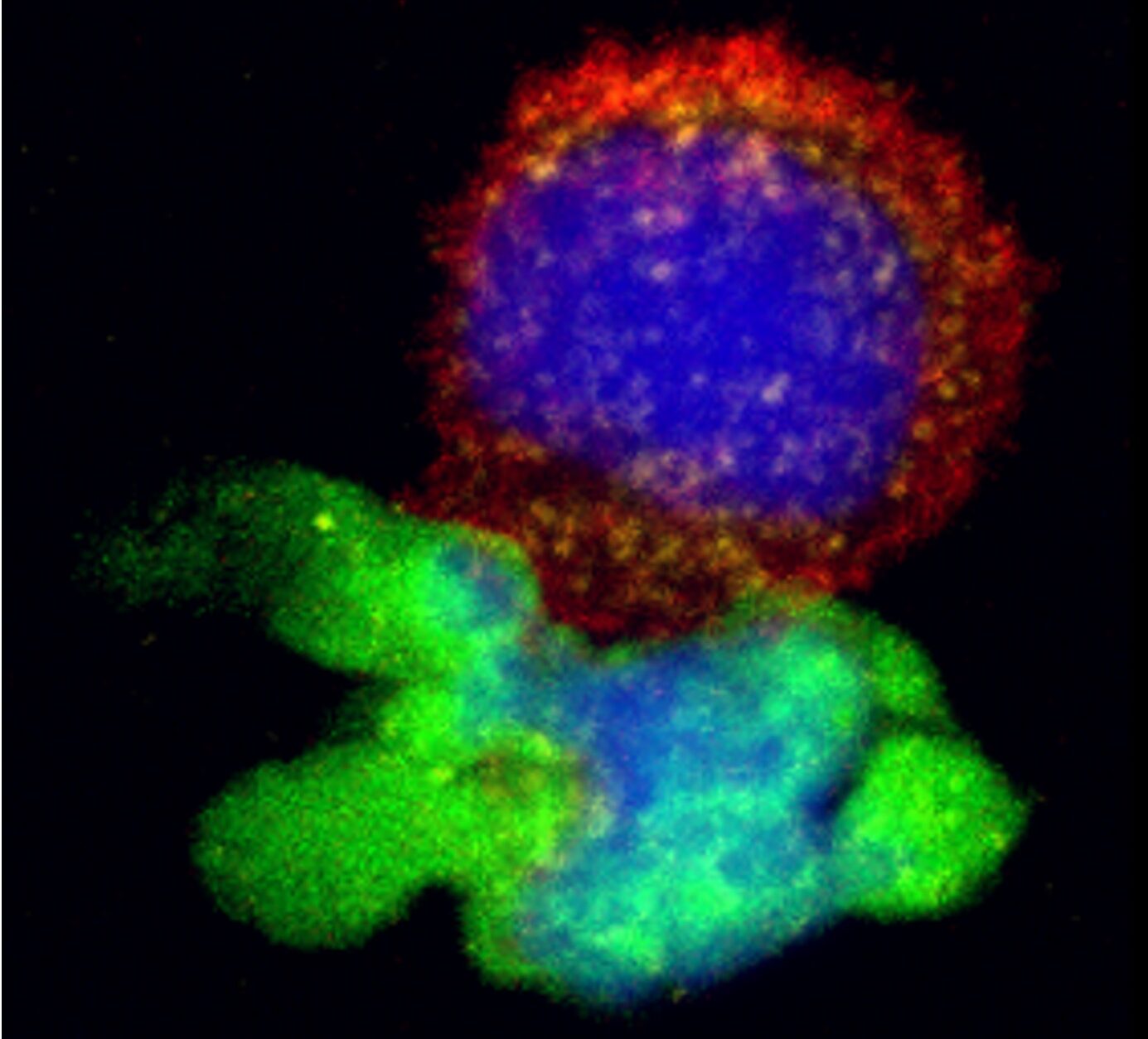
“My research focuses on using a patient’s immune system to treat their cancer,” Dr. Kohler said. “Taking cells that our body produces to fight viruses and infections and reprogramming them so that they now see cancer cells as dangerous and as something that needs to be eliminated.”
Immunotherapy is often preferred to traditional approaches such as chemotherapy or radiation because of its targeted approach. By training the cells to only attack ‘bad’ cells, the non-cancerous cells are spared.
“That is a huge promise of immune-based therapies, that we can create a therapy that is not just highly effective, but is also highly selective in targeting cancer cells.”
This selectivity can lead to less toxicity, including both short-term side effects and long-term consequences.
“In pediatrics, this is especially important because in the patients that we cure, we’re trying to give them decades of life after cancer. And thinking about ways to provide them with the highest quality of life after their cancer is really important,” Dr. Kohler said. “That is one place where immune-based therapies really have the potential to be game-changing, not only in curing patients that couldn’t be cured before, but in giving them a much higher quality of life after they’ve been cured.”
Recently, Dr. Kohler’s work has expanded by taking an immunotherapeutic approach called CAR T cells to solid tumor cancers, like osteosarcoma. Traditionally, CAR T cells have not had high levels of success in patients with solid tumors, but Dr. Kohler’s lab, in addition to collaborating with fellow researchers at his institution, has newfound hope.
“What we’re really hoping for is that by changing the way that we get the immune cells to recognize and respond to cancer cells, that we can overcome these barriers that have limited how well immune-based therapies have worked in osteosarcoma in the past.”
With the resources in place at the University of Colorado, Dr. Kohler hopes this project, if successful, can quickly move to a clinical trial.
We Can’t Achieve Victory Over Cancer Alone
Dr. Kohler received a Translational grant award from the V Foundation for his work in osteosarcoma. The grant was funded by the Dick Vitale Pediatric Cancer Research Fund with support from Live Like Madison, a nonprofit partner of the V Foundation that is dedicated to pediatric cancer research in honor of Madison Fedak, who lost her battle with osteosarcoma at the age of seven. For Dr. Kohler, support from organizations like the V Foundation and Live Like Madison is vital.
“Foundation-supported research is crucial to the field,” Dr. Kohler said. “There’s no way around that. It allows researchers like me to stretch, to be more ambitious, to propose things that are a little riskier, but that if successful, really could be impactful in the near future.”
Just as it takes a team and support system to win championships, it takes a team to accelerate Victory Over Cancer.
“Having foundations partner with each other to utilize the individual strengths of those foundations and hone in on the things that are important to them is also a critical evolution of how we fund science. It’s been increasingly clear over the last 10-20 years that in science, we need to collaborate, we need to reach out, we need to cross barriers, we need to work with people that we didn’t work with before so that we could bring different perspectives and different strengths to these really complicated and critical problems that we haven’t been able to solve individually. I think replicating this strategy in how we fund science is equally important.”