Co-funded by the Dick Vitale Gala, and WWE in honor of Connor’s Cure
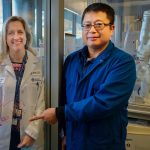
Dr. Jun Qi is a synthetic organic chemist and chemical biologist who has developed small molecules and pioneered anovel chemical strategy in which small molecule therapeutics can be designed to destroy specific proteins within a cell, as opposed to suppressing enzymatic function.Dr. Mariella Filbin is a physician scientist specializing in pediatric neuro-oncology with clinical and scientific interests converging upon pediatric brain cancers, in particular, diffuse intrinsic protein glioma (DIPG) which is universally fatal. Dr. Filbin has used patient-derived modelsto identify a potential DIPG-specific target for Dr. Qi’s protein degrader technology. They will work together to overcome challenges in childhood brain cancer treatment, such as toxicity and blood-brain-barrier (BBB) penetration.This exciting study has two broad objectives:
To define the mechanism by whichthe cancer dependent proteinis driving DIPG formation and growth;
To yield optimized drug compounds suitable for preclinical study and translation to clinical trials in DIPG.
By working together as team, Drs. Qi and Filbin will cultivate a symmetrical relationship in whichchemistry will be used to clarify the biology; and biology will be used to guide the small molecule design and development. By combining their complementary skill sets in chemistry, chemical biology and cancer biology, their joint efforts will result in the preclinical validation of eliminating the target genes and ideally the development of a clinical trial using this novel strategy for DIPG to achieve the bench-to-bedside translation of their research.
Volunteer Grant funded by the V Foundation Wine Celebration in honor of Robert and Gail Sims
The advent of immunotherapy has dramatically changed the landscape of cancer treatments. The power of immunotherapy its potential toinduce long-lasting benefits for terminally ill patients, however only a minority of patients are currently responding to the treatment. We have previously shown that the composition of the immune cells found within the tumor is critically important for the therapeutic outcome, with two immune cell types being required for a strong and effective tumor elimination. These cell types are so-called killer T-cells, which recognize and eliminate tumor cells and dendritic cells, which are needed to “license” T cells to kill.
Killer T-cells are most effective when they are directed against targets only present on tumor cells and when all tumor cells have an evenly distributed expression of this target. However, in most tumors the targets are unevenly represented and only partially present representing ahurdle for successful tumor cell elimination. But more importantly this diffuse pattern directly weakens the strength of the killer T-cellresponse and changes the composition of immune cells in the tumor. To date we do not understand why a weaker T-cell response is observed and how we could overcome this shortcoming therapeutically. In the funded study, we aim to understand the dynamics of akiller T-cell responses against tumors with uneven target expression. In doing so we aim to understand which factors impact the expansion and function of killer T-cells and ultimately harness this knowledge to expand the fraction of patients benefiting from immunotherapy.
Funded by the Constellation Gold Network Distributors
The human body generates hundreds of billions of new blood cells every day to replace old and dying cells. These new cells come from stems cells that live in the bone marrow. Sometimes the genetic material inside one of the stem cells is altered in a way that changes its behavior. The altered stem cells produce too many blood cells and slowly take over the bone marrow. In the clinic, we diagnose this as a type of blood cancer (called myeloproliferative neoplasm or MPN). Intriguingly, the same genetic alteration in different patients can result in very different forms of the disease. The disease outcome is just as unpredictable. Some patients show no symptoms for decades whereas others rapidly deteriorate. To understand this disease, for each patient, we would like to know where and when the disease originated and how the cancer cells expanded over decades. To answer these questions, we have developed technologies that allow us to measure molecular profiles of individual cells. To reconstruct the history of the disease, we will use the genomes of individual cancer cells in the same way that the evolutionary history of species is reconstructed from their present–day genomes. Our preliminary work has shown that cancer first occurs decades before diagnosis. Finally, to test therapies, we will engineer mice in which individual cells record their lineage histories in their own DNA. Together, our measurement will provide the most comprehensive molecular history of how cancers originate and progress in individual patients.
Funded by the Constellation Gold Network Distributors
Use of a new DNA sequencing technology called next generation sequencing (NGS) has significantly improved our ability to describe the genetic basis of human cancers, including blood cancers like leukemia. However, we do not fully understand how most of the genes that cause leukemia play a role in this disease and how to target them with therapy. We know that mutations in a protein complex called the cohesin complex, which normally helps genes turn on and off, frequently occur in patients with blood cancers. These mutations usually occur during the process of disease progression from pre-cancerous states to highly aggressive cancer types. Cohesin mutations are found in 10-20% of patients with blood cancers such as myelodysplastic syndromes (MDS) and acute myeloid leukemia (AML) and are associated with poor survival. With this grant, we will focus on exploring how DNA changes mediated by the cohesin complex play a role in disease progression. Specifically, we will examine folding of DNA into loops and organization of chromatin during the steps of disease progression. Treatment options for patients with blood cancers are limited, and by expanding our understanding of the mechanisms by which leukemia causing genes contribute to disease development, we aim to inform the design of urgently needed therapies for patients. The impact of this work is far reaching and may extend to patients with other blood cancers, including chronic myelomonocytic leukemia (CMML) and chronic myeloid leukemia (CML), as well as patients with bladder cancer, glioblastoma, Ewing sarcoma and breast cancer.
Patients with leukemia require new and better medicines. While current drug treatments can often clear most leukemia cells from the body, too often the disease will become resistant. We believe that it is important to find new drugs that target the parts of cancer cells that control how and when specific cancer genes are turned on or off. These systems work at regions of our genome called ‘enhancers’. Enhancers represent the most important circuits of our genome by coordinating what genes are on or off. In cancers like leukemia these circuits are broken. This leads to an altered state of unrestrained growth, survival under stress, and resistance to drugs. In leukemia cells there are many mutations in genes that change how enhancers work, but few drugs to target them. We need a complete toolbox of enhancer-targeting drugs and we are making significant progress – but more work is needed to understand how these drugs work in order to identify the patients most likely to benefit. Our goals with this project are to use new genomics tools to study the effects of a new class of enhancer-targeting drugs that directly block critical signaling factors. These drugs have not yet been studied in leukemia, and we expect that our efforts will lead to future use of this promising new type of medicine.
Funded by the Stuart Scott Memorial Cancer Research Fund
Normally, the cells of our body grow and divide only when needed. In cancer, however, this organization breaks down and cells grow out of control. Our lab studies signaling pathways that act as the cell’s circuitry and control when it grows and divides. We also study cellular metabolism, which consists of the chemical reactions a cell uses to turn nutrients into energy and cellular building blocks. Growth signaling pathways are often what become mutated and abnormally activated in cancer, in part, because they play important roles in controlling metabolism. We are particularly interested in a critical metabolic cofactor known as Coenzyme A, which is required to produce cellular energy and building blocks. We have gathered evidence that some cancer cells may have a greater need for Coenzyme A compared to normal cells. Therefore, it may be possible to kill certain tumors before damaging normal tissues by targeting Coenzyme A metabolism. We will characterize specific mutations that may make cells vulnerable to this treatment, and test this treatment concept in cancer cell cultures and mouse tumors. Our basic research into whether this treatment has promise is the necessary first step towards developing a potential new drug that may one day be used to successfully treat patients.
Most cancer treatments — such as chemotherapy, radiation therapy and targeted therapy — work by direct killing of cancer cells. Some of the recent and most powerful therapies work by stimulating the patient’s own immune system to kill cancer cells. While these new immune-based therapies work better than most previous therapies and are now approved for treating 13 cancer types, they do not work for all patients. To understand why these treatments works for some patients and not others, we need better tools to investigate how the immune system interacts with cancer. We have developed a new way of growing tumors outside patients’ bodies to study how tumor cells and immune cells interact with each other. Our goal is to study how different types of immune cells stop cancer growth. We use our new method for growing tumors outside of the body to test out new treatments designed to steer the immune response towards tumor cells more effectively. If initial tests are successful, we will aim to try these new treatments in patients with melanoma and potentially other types of cancer.
Stomach cancer, the third-leading cause of cancer death world-wide, is classically divided into two primary types, one of which is called Diffuse Stomach Cancer (DSC). DSC is a very aggressive and rapidly-lethal disease where we lack effective therapies. Additionally, DSC also impacts a relatively unique group of patients. DSC is increasingly common in young females, often women in their 30’s-40’s and is also highly prevalent in the Latin American and Native American populations. Unfortunately, although DSC patients are in tremendous need of therapies, there has been relatively little laboratory research seeking to understand biology of these cancers or to develop new, more effective therapies. At our cancer center, we have established a new collaborative research programaiming to address this critical unmet medical need. We have built off of the progress we have made by studying the specific genes that are abnormally turned on in these cancers. Over the past years we have specifically studied the biology of DSC and have defined new highly promising candidate therapeutic approaches. Additionally, our collaborative team has developed new cancer models (cancer cells we can grow and study in the laboratory) from Latin American patients’ (and young females’) cancers. We now propose to bring together our new candidate therapies and this new collection of patient models to prepare optimal therapeutic approaches for DSC into clinical trials. This work will enable us to rapidly bring the most promising new therapeutic approaches into patients, including under-represented minorities whose cancers are often not adequately studied.
Funded by the Dick Vitale Pediatric Cancer Research Fund
Diffuse Intrinsic Pontine Gliomas (DIPGs) are heartbreakingly aggressive tumors of childhood for which no curative treatments currently exist. Our research is focusing on a gene called PPM1D which is commonly mutated in DIPGs. We are studying how these mutations cause the tumors to grow and are trying to find ways in which we can target them in new treatments for children with DIPG.
Funded in partnership with Adenoid Cystic Carcinoma Research Foundation (ACCRF)
We recently found that retinoic acid treatment reduces the growth of a salivary gland tumor. The retinoic acid has the ability to shut down the cause of the cancer which is due to the overactivity of a gene called c-myb. Retinoic Acid has been successfully given to patients with a rare type of leukemia and we plan to use the same doses as the leukemia patients. We will examine whether the retinoic acid is active in the tumor and whether the growth of the tumor is reduced. Our studies have the possibility of finding the first treatment for this metastatic tumor.
Manage Consent
To provide the best experiences, we use technologies like cookies to store and/or access device information. Consenting to these technologies will allow us to process data such as browsing behavior or unique IDs on this site. Not consenting or withdrawing consent, may adversely affect certain features and functions.
Functional Always active
The technical storage or access is strictly necessary for the legitimate purpose of enabling the use of a specific service explicitly requested by the subscriber or user, or for the sole purpose of carrying out the transmission of a communication over an electronic communications network.
Preferences
The technical storage or access is necessary for the legitimate purpose of storing preferences that are not requested by the subscriber or user.
Statistics
The technical storage or access that is used exclusively for statistical purposes.The technical storage or access that is used exclusively for anonymous statistical purposes. Without a subpoena, voluntary compliance on the part of your Internet Service Provider, or additional records from a third party, information stored or retrieved for this purpose alone cannot usually be used to identify you.
Marketing
The technical storage or access is required to create user profiles to send advertising, or to track the user on a website or across several websites for similar marketing purposes.
To provide the best experiences, we use technologies like cookies to store and/or access device information. Consenting to these technologies will allow us to process data such as browsing behavior or unique IDs on this site. Not consenting or withdrawing consent, may adversely affect certain features and functions.
Functional Always active
The technical storage or access is strictly necessary for the legitimate purpose of enabling the use of a specific service explicitly requested by the subscriber or user, or for the sole purpose of carrying out the transmission of a communication over an electronic communications network.
Preferences
The technical storage or access is necessary for the legitimate purpose of storing preferences that are not requested by the subscriber or user.
Statistics
The technical storage or access that is used exclusively for statistical purposes.The technical storage or access that is used exclusively for anonymous statistical purposes. Without a subpoena, voluntary compliance on the part of your Internet Service Provider, or additional records from a third party, information stored or retrieved for this purpose alone cannot usually be used to identify you.
Marketing
The technical storage or access is required to create user profiles to send advertising, or to track the user on a website or across several websites for similar marketing purposes.