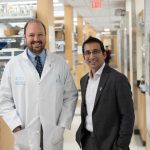
Funded by the Dick Vitale Pediatric Cancer Research Fund
Rhabdomyosarcoma is the most common childhood cancer. Its most hard-to-treat subtype, fusion-positive alveolar Rhabdomyosarcoma (FP-ARMS), is mainly caused by chromosome translocations that form a “fused oncogene” called PAX3-FOXO1 or PAX7-FOXO1. Although the genetic mutations leading to FP-ARMS has been known for decades, the effective therapy to treat FP-ARMS patients is still lacking: less than 50% of the patients are cured, and patients survival rate is less than 10%. In FP-ARMS translocation, a piece of DNA is “fused” to another piece of DNA. Such fused DNA sequence not only consists of the protein-coding genes but also of the non-coding DNA sequences. These non-coding sequences used to be called as “junk DNA”, but more and more studies have shown that they play essential roles in human diseases, including cancer. However, in FP-ARMS, we know very little about whether or how the “fused” non-coding DNA sequences contribute to cancer. In this study, we will take advantage the newly developed technology to address this question that has never been asked: how the “fused” non-coding DNA sequences contribute to tumor development. Our work will help to understand the mechanism that control FP-ARMS development, and in the future, to provide new drug targets for better therapies. More importantly, since chromosome translocation is frequently observed in many childhood cancer types, our pioneer work will also establish the new methods that can be applied to study other pediatric cancers.
Clinical trials offer a path to cure for cancer patients by testing methods to prevent, find or treat many types of illness. Yet, patient access to clinical trials varies; rural areas have limited health care services. Duke University has a wealth of clinical trials for patients with cancer. The goal of this effort is to increase the clinical trials available from Duke to the community. The clinical trials will focus on specific ethnic groups in specific locations. Two types of clinical trials will be the focus: Uncommon cancers– such as blood-based cancers, or cancers that have different effects on specific races – such as prostate.
Duke doctors with special knowledge in Prostate Cancer and blood cancers will go to specific clinics. The Duke doctors will talk with doctors and nurses in the community about patient cases. We will test to see if rural clinics can use central storage for test results from tumors. Central storage will let us match test results from tumors to available clinical trials.
Our team wants to include patients in our effort to improve knowledge about clinical trials. We want to help make them aware that clinical trials are available. A committee that includes patients will help guide the creation of educational tools for patients.
Immunotherapy has revolutionized our ability to care for cancer patients, and works by enabling one’s own immune system to detect and kill cancer cells. Unfortunately, immunotherapy has not yet been broadly effective against the most common type of breast cancer, which is driven by the estrogen hormone (ER-positive or “Luminal” breast cancer). This project aims to overcome this challenge. We will investigate whether radiation treatment in combination with other targeted therapies can overcome resistance to immunotherapy in Luminal breast cancer. We will use clinically relevant breast cancer models to better understand how radiation and immunotherapy work together to stimulate anti-tumor immunity. We will use genetic tests to identify biomarkers of an effective immune response, as well as biomarkers of treatment failure. Finally, we will apply these tests to a clinical trial of radiation and immunotherapy in breast cancer patients. Our goal for this project is to determine whether radiation-immunotherapy combinations can potentially improve the lives of patients with breast cancer. We anticipate that results from this project will inform the optimal design of clinical trials investigating radiation-immunotherapy combinations in breast cancer patients.
In 2018, 81,000 people were diagnosed with bladder cancer (BC) in the US and 17,000 people died from this disease. Three of every four new cases have an early stage of disease, called non-muscle invasive bladder cancer. This type of BC is treatable, but for over half of these patients the cancer keeps coming back and so these ‘high-risk’ patients need additional treatments. Today, we do not know which patients will have their cancer return and so we need to develop a way to know in order to help them sooner. Several cancer causing chemicals are associated with BC and so to help reduce new BC cases we need to identify and remove these chemicals from our environment. A new approach is necessary to tackle BC and our group has shown that our pet dogs can help. Each year in the US, over 60,000 dogs are diagnosed with BC. In this study, our team at NCSU College of Veterinary Medicine and Duke Cancer Institute will look for shared genetic changes in canine and human BC that may provide clues to why these cancers keep returning and how to prevent them. Our dogs live with us and so we will also study whether dogs with early BC share common chemical exposures in the home. This study of canine and human BC will allow us to determine how much help our pet dogs can provide us in looking for new ways to improve BC treatment for both ourselves and for them.
African Americans have the highest percentage of new cancer cases in the United States and the worst outcomes. Other diverse populations have difficulty getting to a cancer treatment center or need help figuring out the system one they arrive. Some people die from cancers that can be prevented or treated, simply because they are not aware of all of the treatment options. Cancer care can be very difficult because many times a patient has more than one doctor who is part of their care team. This can be scary and may make some people choose not to get cancer treatment, even if they can be cured. WFBCCC wants to make sure that everyone has access to the best cancer care possible. This may include patients participating in research that may improve outcomes for them but also may help provide information that can help tailor treatments for the next generation of cancer patients. It is important to make sure all populations are represented in studies that look at new treatments or supports for cancer patients. To meet that goal, we created a population health navigator program- people who are from the community who can help people learn about cancer, how to prevent it, what screening is required and what treatments are available. If someone is diagnosed with cancer, the navigator will assist that person by helping to remove barriers to care and will talk with patients about clinical research as part of their care.
Cancer involving the lining of the uterus is known as endometrial cancer. Endometrial cancer is a common female cancer with about 61,880 new cases per year. When this cancer has spread beyond the uterus, most women will die of their disease. Endometrial cancer deaths have been increasing each year since 2006. We need better and more treatments for this disease. There are tests to identify abnormal genes and proteins on the cancer cells. More research is needed to see if these abnormal genes and proteins can be used to make treatment decisions. We believe that survival for women with endometrial cancer that has spread outside of the uterus will be improved by using the abnormal tumor genes and proteins to find treatments that will work better. Our goal is to look more closely at these abnormal genes and proteins in cancer cells and determine if this new way to make treatment decisions and find better treatments will help women live longer. We also plan to find new drugs to treat this disease. We will bring together a group of medical centers, experts who treat women with this disease, patients, and patient advocates to help guide our study.
The Duke Cancer Institute and the College of Veterinary Medicine at N.C. State University formed a Comparative Oncology Consortium (COC), taking advantage of their expertise and national leadership in their respective disciplines and their geographic proximity. The goals are to collaborate in pre-clinical and clinical cancer research activities in order to advance our understanding of both cancer causation (a high incidence of specific cancers in specific dog breeds provides opportunities to identify new cancer susceptibility genes and environmental factors in cancer causation) and of behaviors and genetics of specific tumor types, as well as to coordinate clinical trials in humans and canines so that novel therapies can be tested in both settings, with information gained in one setting informing the other. In addition to response outcomes of these cancer therapies, the ability to use biomarkers and pharmacology in the canine models can be a novel addition to the characterization of these new cancer therapies and these insights could result in significant enhancements of clinical trial designs (including dosing, scheduling, and combination therapies) when these treatments are tested in human clinical trials. Cost savings and improved clinical trials design would help encourage pharmaceutical companies to use the canine models as part of the assessment process and would benefit the canine patients by giving them access to these novel therapies.
V Scholar Plus Award – extended funding for exceptional V Scholars
Pancreatic cancer is a very aggressive disease. It is the 3rd leading cause of cancer deaths in the USA. Only 8% of patients who can undergo surgery will survive past five years. Late diagnosis and lack of good treatment options are some of the reasons for this outcome. Recent progress in cancer immune therapy showed effect in cancers such as relapsed leukemia and metastatic melanoma. Unfortunately, immune therapy was not effective in patients with pancreatic cancer. One explanation for this result is that pancreatic cancer blocks immune responses against cancer. Thus, understanding how cancer promotes immune suppression is vital to our ability to treat this deadly disease. Our initial work has revealed that B cells promote growth of pancreatic cancer and resistance to immunotherapy. However, it is not clear how B cells promote cancer growth, and how targeting these cells can benefit patients. We propose to understand how B cells function in pancreatic cancer. The goal of this research project is to find new targets that can block immune suppression in pancreatic cancer. Using both mouse models of pancreatic cancer and patient samples, we hope to identify B cell based targets in pancreatic cancer. We ultimately hope to translate our findings into effective therapies that may also work with existing immune therapy treatments.
African Americans have the highest percentage of new cancer cases in the United States and the worst outcomes. Some people die from cancers that can be prevented or treated, simply because they are not aware of all of the treatment options. Cancer care can be very difficult because many times a patient has more than one doctor who is part of their care team. This can be scary and may make some people choose not to get cancer treatment, even if they can be cured. Wake Forest Baptist Comprehensive Cancer Center (WFBCCC) wants to make sure that everyone has access to the best cancer care possible. To meet that goal, we will engage an African American Patient navigator (AAPN) – someone who is from the community who can help people learn about cancer, how to prevent it, what screening is required and what treatments are available. If someone diagnosed with cancer comes to WFBCCC for treatment and needs assistance, the AAPN will meet with them and work to help remove any barriers to care. The AAPN will also talk about clinical research that may be recommended as part of a treatment plan. Cancer research may improve outcomes for them or it may provide information that can help improve treatments for the next generation of cancer patients. Since African Americans get cancer more often, it is important to make sure they are represented in studies that look at new treatments and supports for cancer patients.
Clinical trials are important to improve cancer treatments and survival. Very few people are treated on cancer clinical trials and an even small number of those treated on a trial are African American. One way to solve this problem is to use specially trained staff to help cancer patients better understand clinical trials. These staff are called patient navigators. In this project, we will use patient navigators, one who is African American, to teach and support patients asked to be in cancer clinical trials. These navigators will work as a team to make sure that all African Americans who receive care at the Cancer Center are considered for cancer clinical trials. They will teach patients about clinical trials. They will also help them better understand the hospital system and give advice to patients who live far away and don’t have a car or place to stay when they come to their appointments. They can connect patients to finance counselors, social workers and other helpful community
services. To understand if the project is a success, we will compare the total number of patients, by race, treated on cancer clinical trials before and after the project. We will also study why patients chose not to be on clinical trials even when they are eligible. This information will help us design new projects in the future.
Manage Consent
To provide the best experiences, we use technologies like cookies to store and/or access device information. Consenting to these technologies will allow us to process data such as browsing behavior or unique IDs on this site. Not consenting or withdrawing consent, may adversely affect certain features and functions.
Functional
Always active
The technical storage or access is strictly necessary for the legitimate purpose of enabling the use of a specific service explicitly requested by the subscriber or user, or for the sole purpose of carrying out the transmission of a communication over an electronic communications network.
Preferences
The technical storage or access is necessary for the legitimate purpose of storing preferences that are not requested by the subscriber or user.
Statistics
The technical storage or access that is used exclusively for statistical purposes.The technical storage or access that is used exclusively for anonymous statistical purposes. Without a subpoena, voluntary compliance on the part of your Internet Service Provider, or additional records from a third party, information stored or retrieved for this purpose alone cannot usually be used to identify you.
Marketing
The technical storage or access is required to create user profiles to send advertising, or to track the user on a website or across several websites for similar marketing purposes.
To provide the best experiences, we use technologies like cookies to store and/or access device information. Consenting to these technologies will allow us to process data such as browsing behavior or unique IDs on this site. Not consenting or withdrawing consent, may adversely affect certain features and functions.
Functional
Always active
The technical storage or access is strictly necessary for the legitimate purpose of enabling the use of a specific service explicitly requested by the subscriber or user, or for the sole purpose of carrying out the transmission of a communication over an electronic communications network.
Preferences
The technical storage or access is necessary for the legitimate purpose of storing preferences that are not requested by the subscriber or user.
Statistics
The technical storage or access that is used exclusively for statistical purposes.The technical storage or access that is used exclusively for anonymous statistical purposes. Without a subpoena, voluntary compliance on the part of your Internet Service Provider, or additional records from a third party, information stored or retrieved for this purpose alone cannot usually be used to identify you.
Marketing
The technical storage or access is required to create user profiles to send advertising, or to track the user on a website or across several websites for similar marketing purposes.