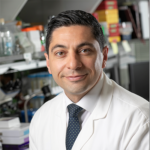
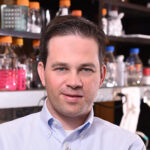
The All-Star Grant is a re-investment in previous V Scholar or Translational grant recipients who are invited to apply for a $1,000,000 grant payable over 5 years. Any type of cancer research is permitted. This grant also includes salary support for a mentored post-doctoral fellow, which supports the next generation of cancer researchers.
Cancer cells often live in a state of genetic chaos. This makes them hard to kill with existing drugs and allows cancer to spread to other parts of the body. We wanted to find out why this happens so we could stop it. We discovered that this chaos helps cancer cells hide from the body’s immune system. Usually, the immune system finds and kills cancer cells, but these cells stay invisible. To fix this, we created a new medicine. It targets the chaotic cancer cells but does not affect healthy cells. This drug turns the cancer against itself. Instead of hiding from the immune system, the cancer cells now send out a signal. This signal tells the immune system to come and destroy them. We are now testing this new medication on different types of cancers that are otherwise difficult to treat. If it works, it could lead to new treatments that save many lives.
Cac Patients with cancer suffer from weight loss. This loss is due to the loss in skeletal muscle. Patients with cancer are vulnerable to muscle loss. Patients with muscle loss also respond poorly to their treatment which lowers their survival. There is no cure for muscle loss in cancer. Therefore, understanding the causes of muscle loss may lead to new therapies. Our laboratory studies how cancer promotes muscle loss. In this proposal, we identify an inflammatory factor. Our goal is to determine how this factor causes muscle loss. Importantly, this same factor also promotes cancer. Thus, our studies might understand how this factor functions in both cancer and muscle loss.
Our research tries to understand the very earliest stages of blood cancer formation. The goal of this project is to use the processes by which these initial cells use to become cancer against them to develop a new treatments. In our study of the earliest stages of blood cancer development, our research has identified one way these cancer-forming cells are to live much longer than normal cells, which contributes to their increased growth in the bone marrow. We have identified a specific process these cancer forming cells use to live much longer than normal. This discovery is important because it opens up a new treatments. There is a drug that inhibits the same specific process we show these early blood cancer cells use grow faster. In this project, we will use this drug in our experiments and on cells from blood cancer patients to determine if it can preferentially kill these cells compared to healthy bone marrow cells. Most blood cancers currently have no cures. Our goal is to bring new treatment options for these patients. Ultimately, we hope that such approaches can even be used for blood cancer prevention.
Funded with support from Hockey Fights Cancer powered by the V Foundation presented by AstraZeneca
All cells in the human body have the same DNA, but different types of cells do different jobs. This happens because cells follow extra instructions that tell them how to behave. These instructions are part of a system called epigenetics. One important epigenetic marker is called DNA methylation. It is a small chemical tag on DNA that helps cells work the right way.In many aggressive cancers, large parts of the DNA lose these chemical tags. When this happens, the cancer often grows faster and is harder to treat. Until now, we have not known how to use this information to help choose better treatments.We found that cancers with low DNA methylation have a weakness. Their cells depend strongly on a growth signal called AKT to survive. Drugs that block AKT can slow down or kill these cancer cells. When AKT is blocked, the cancer cells become even more dependent on another system called PRC2, which helps control which genes are turned on or off. By blocking both AKT and PRC2 at the same time, we were able to kill cancer cells much more effectively.Based on these results, we believe low DNA methylation can be used to provide a clue that helps choose the best treatment. We plan to test drug combinations in a clinical study and develop simple tests to see how well the treatment works. If successful, this approach could lead to a more personalized treatment for patients with cancer.
Funded by the Dick Vitale Pediatric Cancer Research Fund with support from Constellation Gold Network Distributors and Hockey Fights Cancer
Children with Down syndrome have a higher chance of getting blood cancer called leukemia. Many babies are born with a condition called transient abnormal myelopoiesis (TAM). TAM starts before birth and causes too many immature blood cells to grow. In most babies, TAM goes away on its own. But in some, it can be very serious or later turn into leukemia. Right now, doctors do not know why this happens or how to tell which babies are at risk.In this study, we will use new tools to look at single blood cells to learn more about how TAM starts, how it changes into leukemia, and why treatments sometimes stop working. We will study blood and bone marrow samples from children at different stages of the disease, as well as from pregnancies with Down syndrome, to find out when and where the first changes begin.Our goal is to find better ways to predict which babies with Down syndrome will get leukemia and to develop safer, more effective treatments. This work could improve survival and quality of life for children with Down syndrome and their families.
Funded by the Dick Vitale Pediatric Cancer Research Fund with support from Constellation Gold Network Distributors
Burkett’s lymphoma and neuroblastoma are two different types of childhood cancers that share a common link: the MYC gene. Chemotherapy is often used for treatment, but the side effects can be hard on young patients. Doctors and researchers now know that the side effects are mostly from blocking the growth of both cancer cells and healthy cells. Chemotherapy also does not work well for some patients. Our research focuses on drugs that target MYC to safely slow the growth of cancer cells. We will test these new drugs in the laboratory for future development into medications for patients. In the end, our work will produce better medicines to treat these cancers without giving up patient comfort.
Funded by the Dick Vitale Pediatric Cancer Research Fund
Cancer immunotherapy is a treatment that helps the body’s immune system fight cancer. It works very well for some cancers, but it is less effective in infants and children. One reason is that the young immune system is built to turn down strong reactions. This helps babies avoid harmful inflammation when they first eat food or meet the friendly bacteria in their gut. The Brown Lab recently found a new type of immune cell, called Thetis cells. These cells play an important role in suppressing immune responses during early life. We think they may also train the immune system not to attack cancers, which lets tumors grow. In this project, we will study how Thetis cells act in childhood cancers such as hepatoblastoma and use what we learn to design new treatments.
Funded by the Dick Vitale Pediatric Cancer Research Fund
When the body is unable to fix damaged DNA, it can cause some childhood cancers to grow very quickly. These cancers have many DNA changes (called “mutations”) so we call them “hypermutant”. Some children are born with a syndrome, called CMMRD, which makes them develop a lot of these hypermutant cancers at a young age. A treatment called immunotherapy has shown positive results in these patients. However, it doesn’t work for everybody and when a cancer is found late, about 40% of children will get worse, even after treatment. Immunotherapy can also cause side effects, some of which are serious. Recently, we discovered that mRNA-LNP vaccines (similar to those used for COVID-19) may actually be able to prevent cancers in children with CMMRD. These vaccines have very few side effects and might help many patients. However, we still need to learn more about what components make an effective vaccine and then test it in human and animal models. In this project, we will do three things. We will first determine what should be included in a vaccine to make it work well. We will then test the vaccine in mice to see if it can prevent cancer. Finally, we will see how well the vaccine works and how safe it is for humans. To do this, we will work with international collaborators who have experience making vaccines. This work has the potential to help children with many other cancer-causing syndromes, as well as common adult cancers.
Funded by the 2026 Dick Vitale Gala in memory of Aubrien Jimenez
Many children with cancer have changes in their genes that help tumors grow. One important change is called FGFR1 N546K, which is found in about 3% of children with solid tumors, including certain brain cancers and other childhood cancers. This change makes cancer cells grow faster, but current cancer drugs do not work well against it.Our research team will search for new medicines that specifically target this genetic change. We will begin by testing 65,000 compounds to find which ones block the cancer-causing protein. The most promising compounds will then be tested in cancer cells to confirm they work in the right way. Finally, we will study how these medicines attach to the protein using detailed imaging, which will guide us in improving them further.Children with this gene change currently have very few treatment options. If we are successful, the medicines we discover could help treat not only one type of cancer but many different childhood cancers that share similar gene changes. Our ultimate goal is to give doctors new tools that help children live longer, healthier lives and to create a path toward better treatments for childhood cancer.
Funded by the Dick Vitale Pediatric Cancer Research Fund
Rhabdomyosarcoma (RMS) is a connective tissue cancer with features of skeletal muscle, and the most common soft tissue cancer of childhood. RMS can be classified as lacking or having a PAX3::FOXO1 fusion, in which part of the PAX3 protein becomes attached to part of the FOXO1 protein. This hybrid, fused protein is the driving mutation of fusion-positive RMS (FP-RMS). Survival for children with FP-RMS is less than 30%, and this has not improved in over 40 years. In fact, we have no new effective drugs for this cancer. Chemotherapies developed in the 1970s are still the best we have today. This research focuses on understanding how to block PAX3::FOXO1. However, PAX3::FOXO1 is a difficult drug target due to its complex structure. To complicate matters, at least six other fusions have recently been discovered that drive FP-RMS. Rather than being discouraged, we have leveraged this information. We have figured out that all of these seven fusions depend upon a core set of helper proteins to cause FP-RMS. In this project we will figure out the regions of the seven fusions that have common roles and that are responsible for recruiting the helper proteins. Last, we will use hi-tech chemistry to find small molecules to attach to these common regions to dissolve away the helper proteins. This will provide a platform from which to design, and in the future, clinically evaluate new drugs to block any fusion found in FP-RMS. We hope to provide targeted, less toxic treatments.
Manage Consent
To provide the best experiences, we use technologies like cookies to store and/or access device information. Consenting to these technologies will allow us to process data such as browsing behavior or unique IDs on this site. Not consenting or withdrawing consent, may adversely affect certain features and functions.
Functional
Always active
The technical storage or access is strictly necessary for the legitimate purpose of enabling the use of a specific service explicitly requested by the subscriber or user, or for the sole purpose of carrying out the transmission of a communication over an electronic communications network.
Preferences
The technical storage or access is necessary for the legitimate purpose of storing preferences that are not requested by the subscriber or user.
Statistics
The technical storage or access that is used exclusively for statistical purposes.The technical storage or access that is used exclusively for anonymous statistical purposes. Without a subpoena, voluntary compliance on the part of your Internet Service Provider, or additional records from a third party, information stored or retrieved for this purpose alone cannot usually be used to identify you.
Marketing
The technical storage or access is required to create user profiles to send advertising, or to track the user on a website or across several websites for similar marketing purposes.
To provide the best experiences, we use technologies like cookies to store and/or access device information. Consenting to these technologies will allow us to process data such as browsing behavior or unique IDs on this site. Not consenting or withdrawing consent, may adversely affect certain features and functions.
Functional
Always active
The technical storage or access is strictly necessary for the legitimate purpose of enabling the use of a specific service explicitly requested by the subscriber or user, or for the sole purpose of carrying out the transmission of a communication over an electronic communications network.
Preferences
The technical storage or access is necessary for the legitimate purpose of storing preferences that are not requested by the subscriber or user.
Statistics
The technical storage or access that is used exclusively for statistical purposes.The technical storage or access that is used exclusively for anonymous statistical purposes. Without a subpoena, voluntary compliance on the part of your Internet Service Provider, or additional records from a third party, information stored or retrieved for this purpose alone cannot usually be used to identify you.
Marketing
The technical storage or access is required to create user profiles to send advertising, or to track the user on a website or across several websites for similar marketing purposes.