Designed to identify, retain and further the careers of talented young investigators. Provides funds directly to scientists developing their own independent laboratory research projects. These grants enable talented young scientists to establish their laboratories and gain a competitive edge necessary to earn additional funding from other sources. The V Scholars determine how to best use the funds in their research projects. The grants are $200,000, two-year commitments.
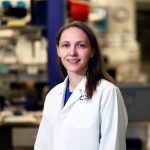
Lung cancers are often driven by genetic changes. The focus of my research is on a type of lung cancer that is driven by changes in the EGFR gene. This type of lung cancer often occurs in younger patients who are non-smokers. New medications can target these changes. This has allowed patients to live longer. However, patients are almost never cured of their disease. My goal is to understand why responses to these EGFR targeted treatments are almost never curative. Then I will work to identify new medications that can be used together with EGFR inhibitors. This may allow patients to live longer. I will accomplish this goal by identifying all of the genetic changes present in patients’ tumors. This will allow us to understand which ones may be allowing cancer cells to survive. I will also assess tumors for other changes that occur within cancer cells. In addition, I will look at the immune cells that are in the tumor. To summarize, the goal of this research is to identify new combination therapy strategies that can improve the depth and duration of response to EGFR targeted therapies, allowing patients with this deadly disease to live longer.
Funded in partnership with the SAGERSTRONG Foundation in memory of Craig Sager
There are trillions of bacteria, viruses and fungi inside each and every human. We call this the microbiome. Scientists have found that the microbiome can change how cancer grows and how people respond to cancer therapies. Our lab wants to make the lives of cancer patients better by improving their microbiomes. The usual ways to change the microbiome are through diet, antibiotics, and by eating live bacteria in food. An example of a food with live bacteria is active culture yogurt. We are doing an experiment to see if a special type of fiber can improve the human microbiome. This fiber is digested by specific bacteria in the gut. When it is digested, it is turned into molecules that control the human immune system. We are giving cancer patients this fiber to see if we can increase these immune system-controlling molecules. If this works, we will prevent the immune system from doing harm in cancer patients. We hope to help patients like those who get blood and marrow transplants for treatment of leukemia or lymphoma. Once we understand how these fibers and our microbes change the immune system, we can figure out precise ways to use this knowledge to make the immune system work better. For example, we may be able to make exciting new cancer therapies, like immunotherapy, work better.
Age is the greatest risk factor for breast cancer. About 80% of all breast cancers occur in women older than age 50. Aging is associated with tissue changes as well as changes in the genes that are expressed in breast cells. However, the age-related molecular and cellular mechanisms that underlie these changes and contribute to breast cancer development remains poorly understood. Our lab studies a mechanism by which genes are read to produce different proteins, called RNA splicing. RNA splicing can generate proteins with different functions from a single gene. We previously discovered that this process is altered in human tumors and leads to breast cancer. Additionally, changes in RNA splicing also occur in healthy aging. Here we will test the hypothesis that (1) changes in RNA splicing occur in the mammary tissue with age, and (2) that these splicing changes prime the breast for tumor formation. Our research findings may provide biomarkers of breast cancer risk before the tumor develops. Our ultimate goal is to identify novel strategies for early breast cancer detection, early intervention, and prevention.
Funded by the Stuart Scott Memorial Cancer Research Fund
Pancreatic cancer is a deadly disease. Most patients with pancreatic cancer are diagnosed at late stages. There are no impactful treatments for this disease. Patients with advanced disease only survive for a few months. There is a need for novel approaches for novel therapies. We need to understand the biology that allows cancer cells to create new tumors and invade other tissues. We propose to study the role of a new RNA modification. These changes on RNA control many aspects of the cells. Recently, the proteins that modify the RNA have been involved in several cancer types. However, the way that they act in cancer cells is unknown. We propose that the RNA changes are used by cancer cells to increase their ability to grow and invade new tissues. Thus, we propose to use multiple approaches to test the role of this RNA modification in pancreatic cancer initiation and progression. Understanding the basic mechanisms involved in the abnormal use of this RNA changes could lead to the development of novel therapies to treat cancer and metastatic diseases.
Diffuse large B-cell lymphoma is a blood cancer that is currently treated with chemotherapy drugs. These drugs can be toxic, and do not work for all patients. Certain cancer-causing genes must be turned on in order for lymphoma cells to grow and survive. One new way to treat patients with lymphoma might be to find drugs that turn off the ‘switches’ that cancer cells use to turn genes on. This could potentially kill cancer cells without hurting normal cells.
We will study the proteins and DNA code that serve as a ‘switch’ to control two lymphoma-promoting genes, MYC and BCL6. We will use new technologies to learn how these genes are turned on, and how we can block this process. Some lymphomas contain errors in the DNA code (mutations) that alter these gene ‘switches’. We will compare the function of lymphomas with mutations to lymphomas with intact ‘switches’.
This project has two main goals. First, we seek to create new tests that can be used to find mutated gene ‘switches’ and guide lymphoma patient care. Second, we seek to find target proteins that could be used to create new lymphoma treatments.
A new form of treatment for cancer is to activate a patient’s own immune system to recognize and destroy tumor cells. Called cancer immunotherapy, this strategy has proven to have a remarkable impact on long-term survival for patients with a wide range of cancer types, but only a subset of individuals has sustained responses that can lead to a long-term cure. In order to advance cancer immunotherapy, it is critical to understand the immune signals responsible for robust tumor immunity.
One key part of the immune response to cancer is a cellular protein named STING (Stimulator of Interferon Genes) that allows immune cells to detect DNA derived from tumors. STING naturally responds to drug-like small molecules, and an exciting new area of study is the idea of “STINGing cancer” – using compounds that specifically activate STING to boost tumor recognition and patient responses to cancer immunotherapy. In spite of the clear role of STING in immune cell responses, STING signaling is poorly understood and we do not understand how signaling leads to improved patient responses.
Our research will determine how STING transmits signals to the immune system and which STING signal is critical for combating cancer. These experiments will provide the foundation for the design of next-generation drugs that target STING and, ultimately, will help us understand how to use cellular proteins like STING to better control human immune responses and treat cancer.
Funded in memory of Tony Smith, EdD, Member of the V Foundation Board, 2003-2017
Blood cancers, such as leukemia, often begin in the bone marrow where rare blood-forming stem cells regenerate normal blood cells throughout life. Many blood cancers can be eliminated with chemotherapy, but chemotherapy also destroys normal stem cells. Thus, many cancer patients depend on receiving stem cell transplants after therapy. Sadly, many patients are unable to receive life-saving transplants because of insufficient numbers of available stem cells. One way we can overcome this challenge is to develop ways to grow and expand blood-forming stem cells outside the body, but previous efforts to do so have been unsuccessful. Recently, we discovered that stem cells make new proteins much more slowly than other blood cells, and this slow rate of protein production is crucial for stem cell function. Proteins are the functional products of genes and perform many specialized tasks within cells. Making proteins too quickly increases assembly errors leading to the production of dysfunctional and toxic proteins. In contrast, producing proteins slowly helps ensure that new proteins are precisely assembled, are of high quality and function correctly. We found that growing stem cells outside the body increases the rate of protein assembly and decreases protein quality, which impairs stem cells. We are using new and innovative strategies to enhance protein quality within stem cells that could, for the first time, enable expansion of blood-forming stem cells in the laboratory. These discoveries could provide new therapeutic possibilities for numerous cancer patients.
Funded by Team V runner Jack Daly’s fundraising efforts in loving memory of his wife, Bonnie
In 2016, pancreatic cancer overtook breast cancer to become the third leading cause of cancer related death in the United States. Therapies used to treat pancreatic cancer to date have provided limited benefit, indicating that an improved understanding of complex mechanisms of disease progression are needed to develop more effective therapeutic strategies. Pancreatic cancer is characterized in part by an exuberant fibrotic and inflammatory reaction which infiltrates and surrounds tumors, together known as the tumor microenvironment. The pancreatic tumor microenvironment both creates a harsh environment for cancer cells to grow, by limiting blood flow and nutrient availability within the tumor, but also provides factors that enable cancer cells to survive and adapt in the context of this nutrient-poor, challenging microenvironment. I hypothesize that particular cells within the pancreatic tumor microenvironment known as stellate cells, have evolved mechanisms to “feed” energy to cancer cells to simultaneously promote their survival and growth, and to regulate expression of cancer-supportive genes. To test this hypothesis, I will use a combination of patient-derived cancer and microenvironmental cells; these cell types will be cultured together to understand on a molecular level the impact of supportive cells on pancreatic cancer cell survival and behavior. These mechanistic studies will be accompanied by investigation of relevant metabolic pathways in mouse models of human pancreatic cancer, testing both genes and pharmacologic agents which may inhibit microenvironment-mediated tumor growth. Together, these studies have the potential to identify a novel metabolic liability of pancreatic cancer, which may be targetable for therapeutic benefit.
Cancer researchers have found that the immune system plays an important role in cancer. Our immune system I programmed to kill cancer cells. But, cancer cells eventually develop ways to escape the immune system and grow and spread. While it is unclear how this happens, many scientists are now developing therapies to reactivate the immune system to attack cancer cells. This field is called immunotherapy. While promising, we are still in early days, and there is much about the cancer immunology we don’t understand. Through our studies, we have identified a protein called APOBEC3A that might prevent the immune system from destroying cancer cells. APOBEC3A is an interesting protein since it is found in high amounts in many types of cancers, including lung, breast, colon and pancreatic cancer. Here, we will try to understand how APOBEC3A exactly affects the immune system in cancer. Secondly, we have found that human and mouse tumors that have high levels of APOBEC3A also tend to have high levels of molecules that specifically stop immune cells from attacking cancer cells called checkpoints. In a novel preclinical trial, we will see if a combination of drugs that target these molecules can effectively treat cancers that express high levels of APOBEC3A. If this trial works in mice, then this approach may be lead to a new treatment strategy in a subgroup of patients with many types of cancer, including pancreatic cancer.
Funded by the Dick Vitale Gala and Northwestern Mutual in memory of John Saunders
Over one-quarter of children with acute myeloid leukemia (AML) have a form called core binding factor (CBF) AML. Despite intense therapy, ~30% of these patients will relapse. Thus, identifying new therapeutic targets is necessary to develop more effective, less toxic treatment regimens. The CBF complex coordinates the expression of genes required for normal development of blood cells. CBF AMLs harbor one of two genetic changes (t(8;21) or inv(16)) that interferes with the function of the CBF complex. While often grouped together, t(8;21) and inv(16) affect different members of the CBF complex and have unique disease features, suggesting important, yet unknown, biological differences exist. Interestingly, t(8;21) AML and inv(16) AML have different combinations of other cancer-causing mutations, providing potential clues to the genesis of t(8;21) and inv(16) AML. In particular, mutations affecting another complex that regulates gene expression, called the cohesin complex, are common in t(8;21) AML, yet never occur in inv(16) AML. The frequency of cohesin mutations with t(8;21) suggests that cohesin dysfunction cooperates with t(8;21) to cause leukemia by collaboratively activating cancer-causing genes, which could represent targets for therapy. Conversely, the absence of cohesin mutations with inv(16) indicate a dependence upon intact cohesin function, and perhaps the cohesin complex itself could be targeted in inv(16) AML. We will explore the interactions between the cohesin and the CBF complexes in AML using murine and human systems. Our study will provide novel insight into the mechanisms driving CBF AML, likely uncovering herapeutic targets for the treatment of children with this disease.
Manage Consent
To provide the best experiences, we use technologies like cookies to store and/or access device information. Consenting to these technologies will allow us to process data such as browsing behavior or unique IDs on this site. Not consenting or withdrawing consent, may adversely affect certain features and functions.
Functional Always active
The technical storage or access is strictly necessary for the legitimate purpose of enabling the use of a specific service explicitly requested by the subscriber or user, or for the sole purpose of carrying out the transmission of a communication over an electronic communications network.
Preferences
The technical storage or access is necessary for the legitimate purpose of storing preferences that are not requested by the subscriber or user.
Statistics
The technical storage or access that is used exclusively for statistical purposes.The technical storage or access that is used exclusively for anonymous statistical purposes. Without a subpoena, voluntary compliance on the part of your Internet Service Provider, or additional records from a third party, information stored or retrieved for this purpose alone cannot usually be used to identify you.
Marketing
The technical storage or access is required to create user profiles to send advertising, or to track the user on a website or across several websites for similar marketing purposes.
To provide the best experiences, we use technologies like cookies to store and/or access device information. Consenting to these technologies will allow us to process data such as browsing behavior or unique IDs on this site. Not consenting or withdrawing consent, may adversely affect certain features and functions.
Functional Always active
The technical storage or access is strictly necessary for the legitimate purpose of enabling the use of a specific service explicitly requested by the subscriber or user, or for the sole purpose of carrying out the transmission of a communication over an electronic communications network.
Preferences
The technical storage or access is necessary for the legitimate purpose of storing preferences that are not requested by the subscriber or user.
Statistics
The technical storage or access that is used exclusively for statistical purposes.The technical storage or access that is used exclusively for anonymous statistical purposes. Without a subpoena, voluntary compliance on the part of your Internet Service Provider, or additional records from a third party, information stored or retrieved for this purpose alone cannot usually be used to identify you.
Marketing
The technical storage or access is required to create user profiles to send advertising, or to track the user on a website or across several websites for similar marketing purposes.