The All-Star Grant is a re-investment in previous V Scholar or Translational grant recipients who are invited to apply for a $1,000,000 grant payable over 5 years. Any type of cancer research is permitted. This grant also includes salary support for a mentored post-doctoral fellow, which supports the next generation of cancer researchers.
Funded by the Dick Vitale Pediatric Cancer Research Fund
Many children with bone tumors cannot be cured. This is true in particular if the tumor has come back. We are interested in using the immune system to fight cancer. In our approach, we take immune cells from patients and train them in the laboratory to fight cancer. Our training methods consists of inserting a gene into immune cells that are called T-cells. Once the cells have completed training in the laboratory, they are given back to patients. We have conducted this successfully in patients, and now want to improve our approach. Out approach consists of inserting a second gene into T-cells so that the T-cells can grow better in patients after infusion. In our proposal we now want to figure out the best structure of the second gene. We will perform laboratory studies with the T-cells we have made to determine which one works best. Once we have completed these studies, we will then proceed to develop a clinical study. The goal is to have the clinical study open for treatment at the conclusion of the grant. In the clinical study we will determine the safety of T-cells and their ability to destroy tumors. While we focus here on bone tumors, our approach could be adapted to other tumors for which immunotherapies are being developed. If successful, we hope that our approach will lead to better outcomes for children, who can currently not be cured of their cancer.
Funded by the Dick Vitale Pediatric Cancer Research Fund
B-cell acute lymphoblastic leukemia is the most common type of leukemia in children. New immune-based treatments have greatly improved care for many patients. These treatments work by finding markers on the surface of leukemia cells. The markers act like name tags that help the treatment find and kill the cancer cells.But leukemia cells can sometimes escape. They may lower or change these markers, making them harder for treatment to see. When this happens, the cancer may stop responding and can return.Our project will study how leukemia cells control these markers and how they hide from treatment. We will also test whether medicines can help restore the markers and make leukemia cells easier to find and kill. In addition, we will study why resistance develops when different immune-based treatments are used one after another.Our goal is to help these treatments work better and for longer. If we can keep leukemia cells visible to treatment, we may be able to reduce relapse and improve the chance of lasting remission. This work may also help doctors choose the best order or combination of treatments for each patient. In the future, these findings could lead to better and more durable treatments for children living with leukemia.
Funded by the Dick Vitale Pediatric Cancer Research Fund with support from Hockey Fights Cancer and Jeffrey Vinik
Neuroblastoma is a childhood cancer that can be very hard to treat, especially when it comes back after therapy. Many tumors rely on a powerful cancer gene called MYCN, but we still do not fully understand how cancer cells keep MYCN active. Our research focuses on a group of proteins, called MSI1 and MSI2, that help cancer cells make the proteins they need to grow and survive. We have discovered that MSI1 and MSI2 act like a control switch for cancer cells. It helps turn on the production of important cancer-driving proteins, including MYCN. We also found that MSI2 is regulated by another process called arginine methylation, which changes how MSI2 works inside the cell. This gives us a new way to understand how cancer cells control growth at a deeper level. In this project, we will study how MSI proteins help neuroblastoma cells grow and change their identity. We will also test new treatment strategies that block MSI2 and the enzymes that control it. Our goal is to stop cancer cells from making the proteins they need to survive. This research may lead to new treatments that target cancer in a different way—by blocking how cancer cells make key proteins rather than just targeting genes. In the future, this could improve outcomes for children with high-risk neuroblastoma by slowing tumor growth and reducing relapse.
Funded by the Dick Vitale Pediatric Cancer Research Fund
Diffuse midline glioma (DMG) is a serious brain tumor that mainly affects children. These tumors often carry a genetic change called H3K27M, which helps drive the disease. However, we still do not fully understand how DMG cells use nutrients to support their growth.Our early research shows that DMG cells use unusually high amounts of three amino acids—leucine, isoleucine, and valine. These nutrients are known as branched-chain amino acids, or BCAAs. We also found high levels of BCAT1, an enzyme that helps break down BCAAs. When BCAT1 is reduced, DMG cells do not grow as well in the laboratory.This study will examine why DMG tumors depend on BCAAs and BCAT1. We will track how tumor cells use these nutrients and study what happens when BCAT1 is blocked. We will also test whether lowering BCAAs in the diet could slow tumor growth. Similar diets are already used safely in children with certain metabolic disorders.Our goal is to identify a new way to limit DMG growth and, ultimately, help patients live longer.
Funded by the Dick Vitale Pediatric Cancer Research Fund
Hodgkin lymphoma is one of the most common cancers in children, teenagers, and young adults. More than nine out of ten patients are cured today, but the chemotherapy and radiation that cure them can often cause both short- and long-term harm. Many survivors develop serious health problems years later, such as heart disease or a second cancer. In a smaller group of patients, the lymphoma never fully disappears, or it returns after treatment ends. Doctors currently use scans to decide who needs more therapy and who needs less. Scans are helpful, but they are not exact, so some children receive treatment they do not need while others receive too little. Our project tests a better tool: a simple blood test called a liquid biopsy to study DNA from Hodgkin lymphoma. As a tumor grows, it sheds tiny pieces of its DNA into the blood. We can read those DNA pieces, much like scanning a barcode, to measure how much cancer is left in each patient. The same blood sample also reveals viruses and immune cells that shape how the lymphoma behaves. We will study samples from more than two hundred young patients treated in a national clinical trial.Our goal is to build and deliver a scorecard that tells doctors, within weeks of starting treatment, whether the therapy is working or not. If it succeeds, this test will help doctors match treatment to each child. Patients doing well could safely avoid extra chemotherapy and radiation, and the lasting harm they cause. Patients at higher risk could receive more intense treatment right away, while there is still an excellent chance to cure them.
Funded by the Dick Vitale Pediatric Cancer Research Fund with support from Hockey Fights Cancer and Jeffrey Vinik
Leukemia in babies and young children is a serious cancer, and there are few good treatments. A new drug that blocks a protein that helps leukemia grow is now being tested in clinical trials. Our team has a cancer researcher and a leukemia doctor. We will work together to learn why some leukemia cells do not respond to the drug. We will study leukemia cells and the cells around them to learn how they help leukemia live and grow. We will use a new mouse model to see how the drug affects leukemia and nearby cells. We will also test drug combinations to find ways to kill more leukemia cells while causing less harm to normal cells. Our goal is to find safer and better treatments for babies and young children with leukemia, who now have few good treatment options.
Funded by the Dick Vitale Pediatric Cancer Research Fund
What is the problem? Fusion-positive rhabdomyosarcoma is a rare and deadly childhood cancer of muscle tissue. It is caused by a rearranged fusion gene (PAX3-FOXO1) that acts like an “on switch” stuck in the “on” position. Only 39% of children with this cancer are alive five years after diagnosis. Today there is no targeted drug that attacks the root cause of the disease.What is “enhancer addiction”? The rearranged gene does not work alone. It hijacks two helper proteins, called CBP and p300, which chemically tag regions of DNA to keep cancer genes turned on. These tags build up at the cancer’s “enhancer” switches, and the cancer cells become addicted to them. Take away the tags and the cancer loses power.What will this project do? Our lab invented a new medicine called IHK-44 that blocks CBP and p300 from turning on enhancer (gene “on” switches). Over five years, we will (1) show exactly how the medicine stops enhancer addiction, (2) develop a tumor test that predicts which children will benefit most, and (3) make IHK-44 safer and more potent by tuning its chemistry. Then we will test it in mouse models of this cancer. Why does this matter? If IHK-44 works, it will become the first precision medicine designed specifically for fusion-positive rhabdomyosarcoma. This project is the critical step that moves a new drug from the laboratory toward clinical trials, giving children with this cancer a real chance at a longer, healthier life.
Funded by the Dick Vitale Pediatric Cancer Research Fund and the Stuart Scott Memorial Cancer Research Fund
Our overarching goal is to develop new therapies for T-cell acute lymphoblastic leukemia (T-ALL). T-ALL is a particularly aggressive pediatric blood cancer. In the past, researchers tried to target T-ALL with immunotherapies known as CAR T-cells, or CARTs. However, these approaches were usually unsuccessful. This is because surface markers used to label cancer cells are also found on CAR T cells themselves. This causes CARTs to commit “fratricide”. Thus, there is an urgent need to find targets that are unique to cancerous T-cells. Our research has identified one such target called P2RX5. P2RX5 is often thought to be inactive in humans because of widespread inherited mutations. However, we determined that the active version of this gene is still common in people of African and, to a lesser extent, Hispanic origins. What makes it particularly attractive is that CARTs don’t make P2RX5, but high-risk T-ALL cells do. Encouraged by these findings, we created an antibody that can latch onto P2RX5-making cells. We then converted this antibody into CARTs, dubbing them “CART-X5”. Early results showed that CART-X5s can kill cancer cells without harming themselves. Our current plan is to test this approach in mice with leukemia. We see this work as a first step towards clinical trials in humans. While CART-X5 could work only in patients of certain ancestries, the very same patients have far less access to immunotherapy. Bringing CART-X5 to the clinic would reduce these disparities.
Funded by the Dick Vitale Pediatric Cancer Research Fund and the Stuart Scott Memorial Cancer Research Fund
Some children with liver cancer do well with treatment, but others have tumors that are hard to cure or come back. Our project focuses on hepatoblastoma, the most common liver cancer in children. We study a growth signal called Hippo-YAP. In normal cells, this signal helps control growth and repair. In some cancers, it can get stuck “on.” This may help cancer cells grow and may also push them into a more aggressive, stem-like state.We want to find the weak points that YAP-driven liver tumors need to grow. We will study this in mice and in small tumor models, called organoids, grown in the lab from patient samples. These models let us test many genes and then focus on the ones that matter most. We will also test new drugs that block TEAD, a protein that works with YAP, to see whether they slow tumor growth or make the cancer cells less aggressive.This matters because children with high-risk hepatoblastoma need better and safer options. Today, treatment often depends on surgery and strong chemotherapy, which can have serious side effects. By learning what these tumors depend on, we hope to identify more precise treatments. Over time, this work could help guide new therapies for children with liver cancer and may also help children with other cancers driven by the same growth signal.
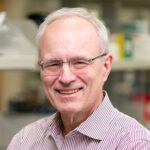
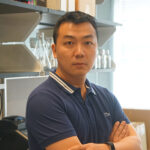
Drs. Carbone and Yang at the University of Hawaii Cancer Center discovered a new inherited disease called BAP1 Cancer Syndrome. People with this condition are born with changes in the BAP1 gene, which puts them at higher risk for several cancers, especially mesothelioma—a deadly cancer of the chest and stomach lining often linked to asbestos. Whole families can be affected because the gene changes are passed down. Here’s the surprising part: even though BAP1 mutations cause cancer, the tumors in these patients often can’t spread easily. This means the cancer is less aggressive, and many patients live for years. Some have even been cured. Now, with support from the V-Foundation All-Star Award, Drs. Carbone and Yang are studying how these patients’ bodies fight cancer. Their goal is to use this discovery to help all cancer patients resist cancer spread, improve survival, and save lives. This research shows that understanding one family’s rare gene mutation could lead to big breakthroughs in cancer treatment for everyone.
Manage Consent
To provide the best experiences, we use technologies like cookies to store and/or access device information. Consenting to these technologies will allow us to process data such as browsing behavior or unique IDs on this site. Not consenting or withdrawing consent, may adversely affect certain features and functions.
Functional
Always active
The technical storage or access is strictly necessary for the legitimate purpose of enabling the use of a specific service explicitly requested by the subscriber or user, or for the sole purpose of carrying out the transmission of a communication over an electronic communications network.
Preferences
The technical storage or access is necessary for the legitimate purpose of storing preferences that are not requested by the subscriber or user.
Statistics
The technical storage or access that is used exclusively for statistical purposes.The technical storage or access that is used exclusively for anonymous statistical purposes. Without a subpoena, voluntary compliance on the part of your Internet Service Provider, or additional records from a third party, information stored or retrieved for this purpose alone cannot usually be used to identify you.
Marketing
The technical storage or access is required to create user profiles to send advertising, or to track the user on a website or across several websites for similar marketing purposes.
To provide the best experiences, we use technologies like cookies to store and/or access device information. Consenting to these technologies will allow us to process data such as browsing behavior or unique IDs on this site. Not consenting or withdrawing consent, may adversely affect certain features and functions.
Functional
Always active
The technical storage or access is strictly necessary for the legitimate purpose of enabling the use of a specific service explicitly requested by the subscriber or user, or for the sole purpose of carrying out the transmission of a communication over an electronic communications network.
Preferences
The technical storage or access is necessary for the legitimate purpose of storing preferences that are not requested by the subscriber or user.
Statistics
The technical storage or access that is used exclusively for statistical purposes.The technical storage or access that is used exclusively for anonymous statistical purposes. Without a subpoena, voluntary compliance on the part of your Internet Service Provider, or additional records from a third party, information stored or retrieved for this purpose alone cannot usually be used to identify you.
Marketing
The technical storage or access is required to create user profiles to send advertising, or to track the user on a website or across several websites for similar marketing purposes.