
Gabby Orlet: Overcoming Cancer to Live Her Dream
How thriver and college volleyball player Gabby Orlet embodies Jim Valvano’s “Don’t Ever Give Up!” spirit
When Gabby Orlet started at Grand Valley State University in the fall of 2025, her dad framed a portion of Jim Valvano’s 1993 ESPYS speech to hang on the wall of her dorm room.
“Number one is laugh. You should laugh every day. Number two is think, you should spend some time in thought. And number three is you should have your emotions moved to tears. Could be happiness or joy, but think about it. If you laugh, you think, and you cry, that’s a full day. That’s a heck of a day. You do that seven days a week, you’re going to have something special.”
The speech, although delivered over 30 years ago, meant a lot to them, especially over the past five years. Lots of laughs. Lots of thoughts. And lots of tears.
“It just shows that every day, I’ve beat it. Everything I’ve been through, I’ve gotten through it,” Gabby said. “I don’t feel like there is much that could take me down now.”
A Sudden Diagnosis
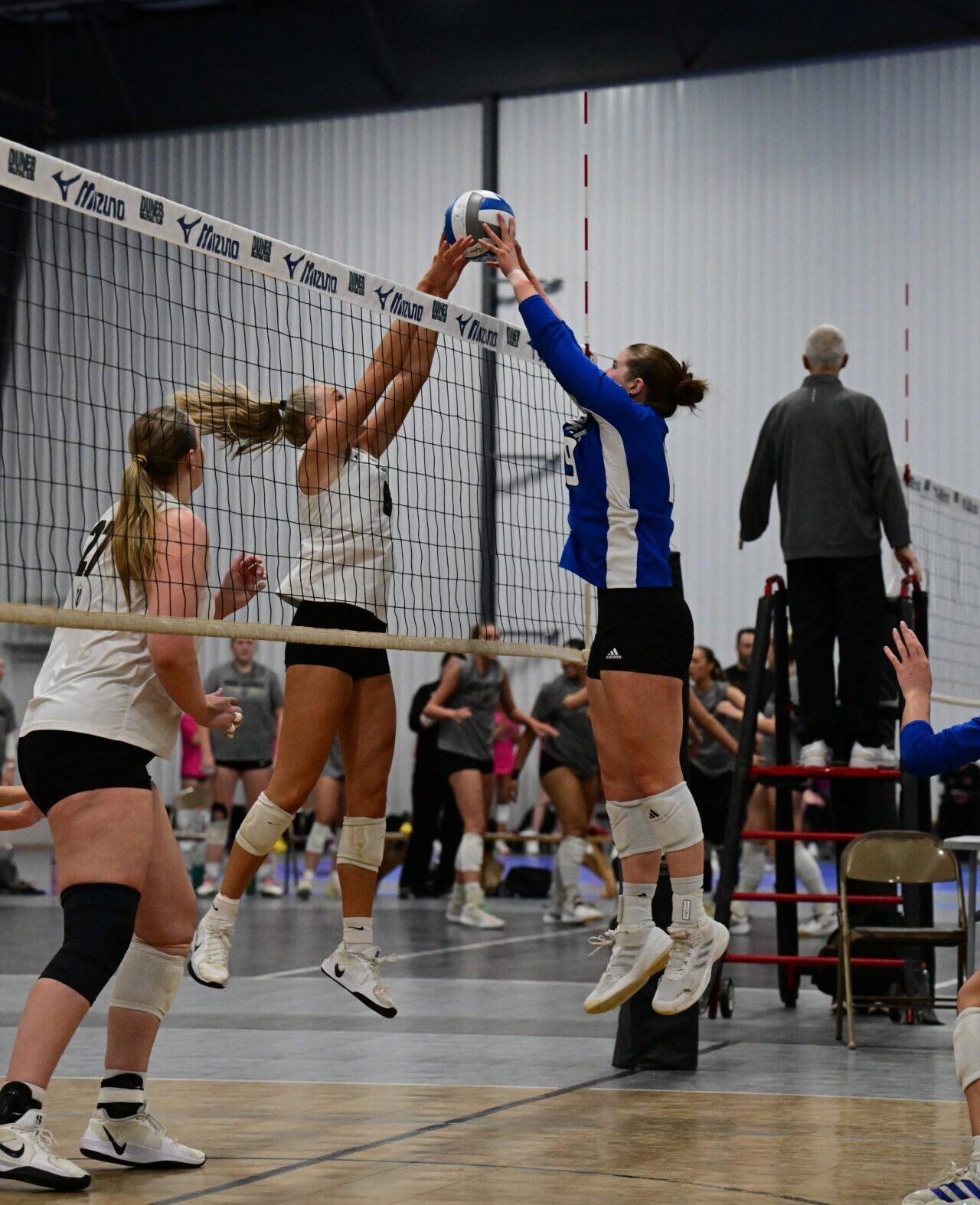
Volleyball has always been a big part of Gabby’s life. The daughter of a college volleyball coach, Gabby grew up playing the sport, watching her mom coach, and traveling with her mom to recruit. She developed a love for the game.
During a practice when Gabby was 14, she landed from a jump and experienced a sharp pain that took her breath away. The pain persisted, causing her to miss out on an upcoming tournament and not being able to raise her arms above her head.
The next week, Gabby fell on a school trip, unable to stand up after. Doctors believed she had fractured a vertebra and sent her home on a Friday, instructing her to call back on a Monday to see if she needed to have surgery. Gabby describes that weekend as, “some of the worst days in my life.”
Gabby could not move and returned to the hospital where imaging showed the vertebrae had compressed 75% more since her fall.
“In four days, it was almost completely gone,” Gabby said. “There was obviously something bigger going on, and they admitted me right away. That night, the doctor came in and said, ‘We’re unsure of what type of cancer it is, but there is a mass on your spine and it’s pushing on your spinal cord’… It could result in me being paralyzed.”
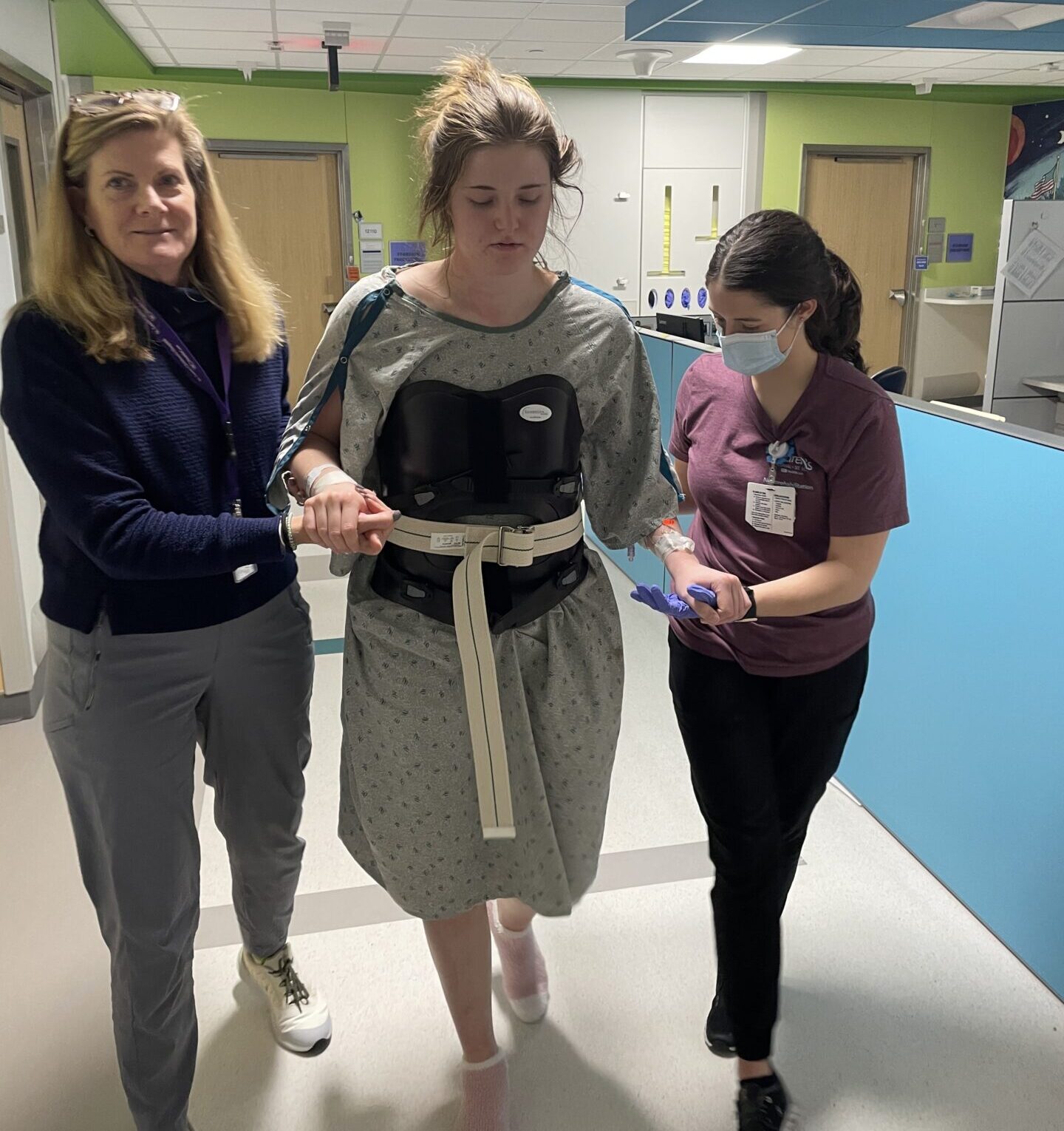
On April 21, 2021, Gabby underwent a 14-hour surgery to remove the tumor, followed by a spinal fusion to place a cage where the tumor was, with rods placed to stabilize her spine. The testing revealed that the tumor was Giant Cell Tumor of Bone, a rare, aggressive tumor that is typically benign and usually appears in young adults.
After surgery, Gabby had to relearn basic movements: standing, walking, showering. And, she endured hours and hours of rehab and therapy. It was draining when all she wanted to do was play sports. She worked incredibly hard to get back on the court by the end of the year.
Relapse and The Importance of Research
In March 2022, during a routine scan, doctors discovered that the cancer had returned. It had metastasized and she was diagnosed with a malignant sarcoma. In addition to her spine, they found 14 spots on her lungs. Chemotherapy was the best option.
“That was obviously a huge shock for me at this point,” Gabby said. “I thought I was out of the woods. They did as well. There was no reason why it should have come back. There were no signs, nothing. That was definitely the most blindsided I’ve ever felt in my whole life.”
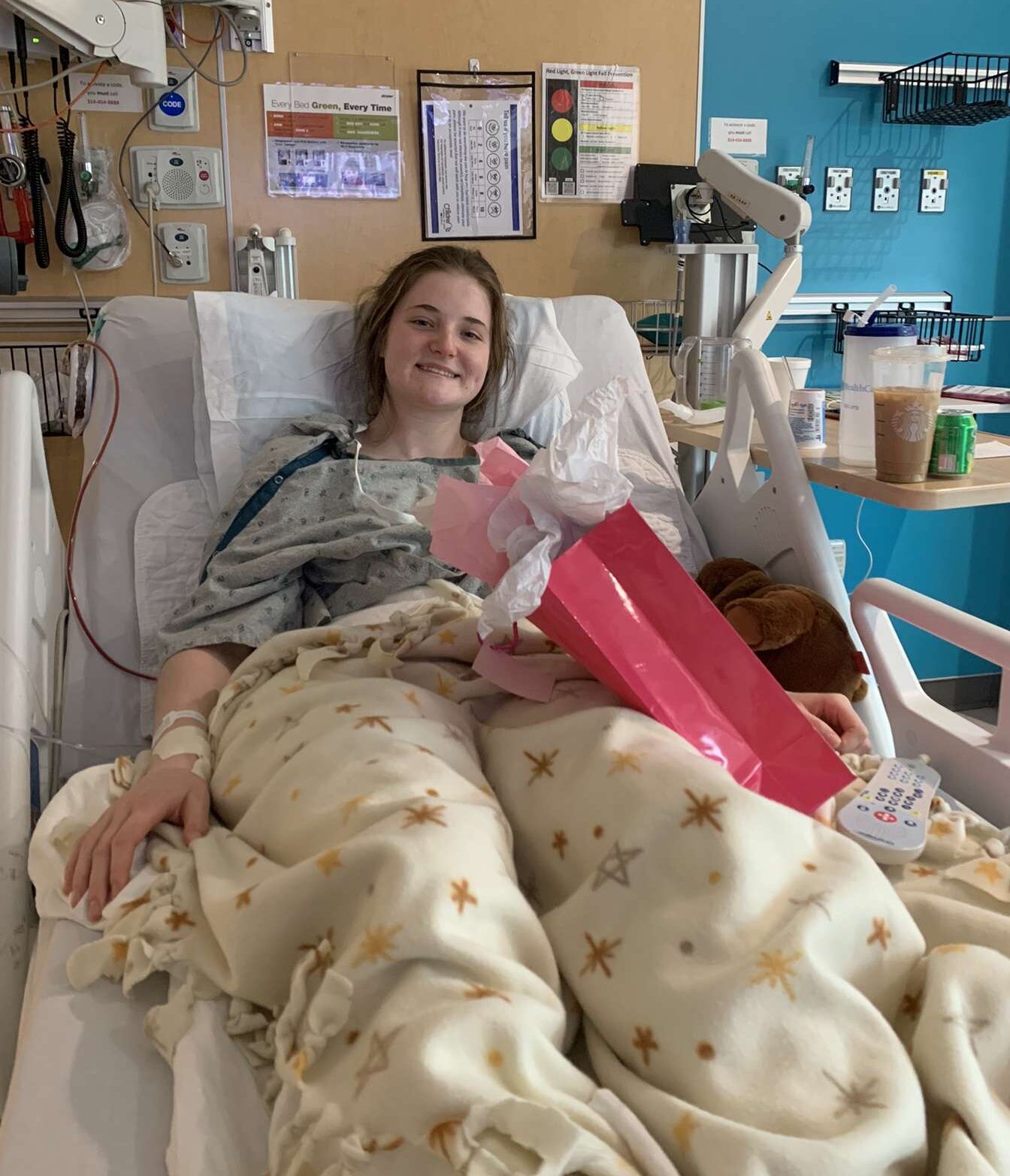
For about seven weeks Gabby had chemotherapy once a week, then because of adverse effects, her medical team adjusted the schedule to once a month. In January she went to MD Anderson Cancer Center and the medical team there recommended transitioning to chemotherapy once every three months indefinitely.
“Because of the type of cancer and how rare it is, they don’t have many studies on it. Multiple doctors have told me, ‘You are the data. We’re learning from you as we go.’ Which is obviously a little scary. Also, kind of interesting sometimes, but obviously that’s never really what you want to hear.”
“Since I’ve started chemo, the lesions have decreased but not enough, and they haven’t disappeared. They don’t have anything strong enough right now in terms of medicine or an immunotherapy to kill the stuff in my lungs. That’s the reason I have to continue doing it indefinitely until we can find a better cure or stronger medication. But I’m hopeful for that in the future.”
Cancer research provides the hope that Gabby holds. Every day there are thousands of researchers working diligently to find the next breakthrough that could help patients like Gabby.
“When I went to MD Anderson, they told me, ‘We’re working on stuff right now. It might not be for a couple years, but there’s stuff in the works. People are working to help you and to help many others.’”
A Lifelong Dream Fulfilled
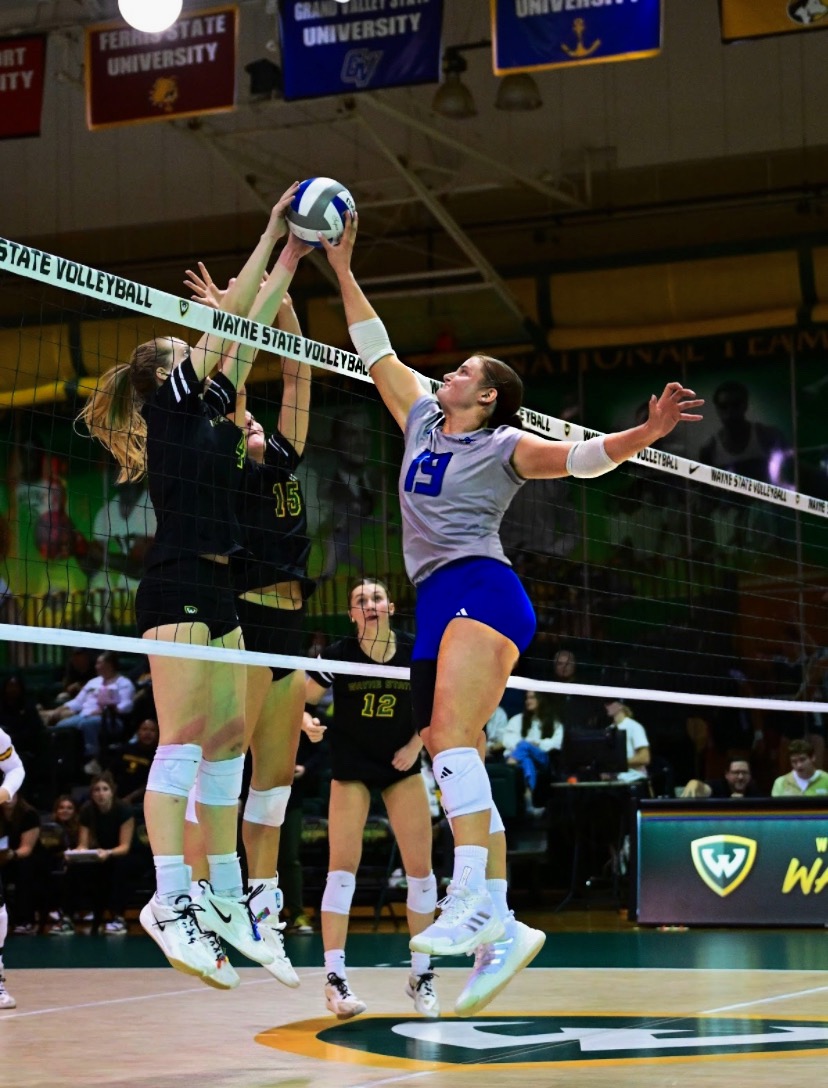
Since returning to the court at the end of 2021, Gabby has played through her chemotherapy. She continued chasing her dream: playing college volleyball. But being diagnosed with cancer at age 14 and undergoing treatment during the prime years of college recruiting provided its share of setbacks.
Gabby persistently reached out to schools, but to many schools, there is a lot of risk in investing in a student athlete with cancer.
“They don’t know me. To them, I’m one of thousands of kids who are interested in their school; how are they supposed to know that I am bigger than this and I can outwork this, and I’ve continued to outwork this… As much as I know it doesn’t define me, they don’t know me well enough to know that.”
In her senior year, Gabby emailed Grand Valley State University in Michigan. She connected with the Coach and scheduled a practice.
“I was completely terrified,” Gabby said. “This is my only chance, and I can’t screw it up. It was amazing. What I loved the most was those coaches didn’t see it as negative. If anything, they saw it as a positive that I had shown how much dedication I had to the sport, and how much determination I had to get back.”
In 2025, her freshman season, Gabby played in 13 matches, starting eight of them, and was twice named the Great Lakes Intercollegiate Athletic Conference Setter of the Week! She’s excited for her sophomore season!

The Legacy of Jim Valvano
When Gabby was diagnosed, her dad shared Jim Valvano’s speech with her. She quickly connected with Jim’s rallying cry advocating for more funding of cancer research.
“I think the part that got me so emotional was that he wasn’t really speaking on behalf of himself,” Gabby said. “He was kind of speaking to future people, and future patients, and his children, and their children, and that something needs to change, and there needs to be more research. He knew that maybe he didn’t have much time, but he wasn’t going to leave here knowing that he didn’t make a difference in everything.”
The V Foundation continues making a difference by funding game-changing cancer research being done by the best and brightest scientists across North America. Since Jim’s speech in 1993, the Foundation has awarded over $458 million in cancer research grants, providing new diagnostic tools, treatment options and cures.
“What this foundation does is beyond cancer research,” Gabby said. “It helps the mental aspects of everything, too… It’s people across the country that are invested in getting you better. People that don’t know you. People that haven’t met you are thinking of you because they know what it’s like.”
“I know what kids are battling, how hard it is to walk into those doctor’s appointments, and how scary it can be for their families and parents to watch them go through that. This foundation helps exactly that. Helps families feel relieved that it’s not all up to me. It’s not all on my shoulders, there’s people looking after me, too.”