
Riding for a Friend. Riding for the Future.
Emily Hsieh knows that meaningful breakthroughs rarely happen overnight. As a scientist, she spends her days thinking years into the future, understanding that discoveries now could one day redefine what's possible for patients. That same long-term perspective is what fuels her as she prepares to cycle over 200 miles from Salt Lake City, UT, to Denver, CO, as part of Bristol Myers Squibb's 2026 C2C4C United States (Coast 2 Coast 4 Cancer) ride.
From September 10 – October 7, more than 100 Bristol Myers Squibb employees will cycle across the country in nine teams, covering nearly 3,000 miles in total and aiming to raise at least $1 million for cancer research through the V Foundation for Cancer Research.
As Emily trains for her segment, each ride represents more than miles. It’s about investing in a future with better treatment options, more quality time for families, and ultimately, a world where no person hears the words, “you have cancer.”
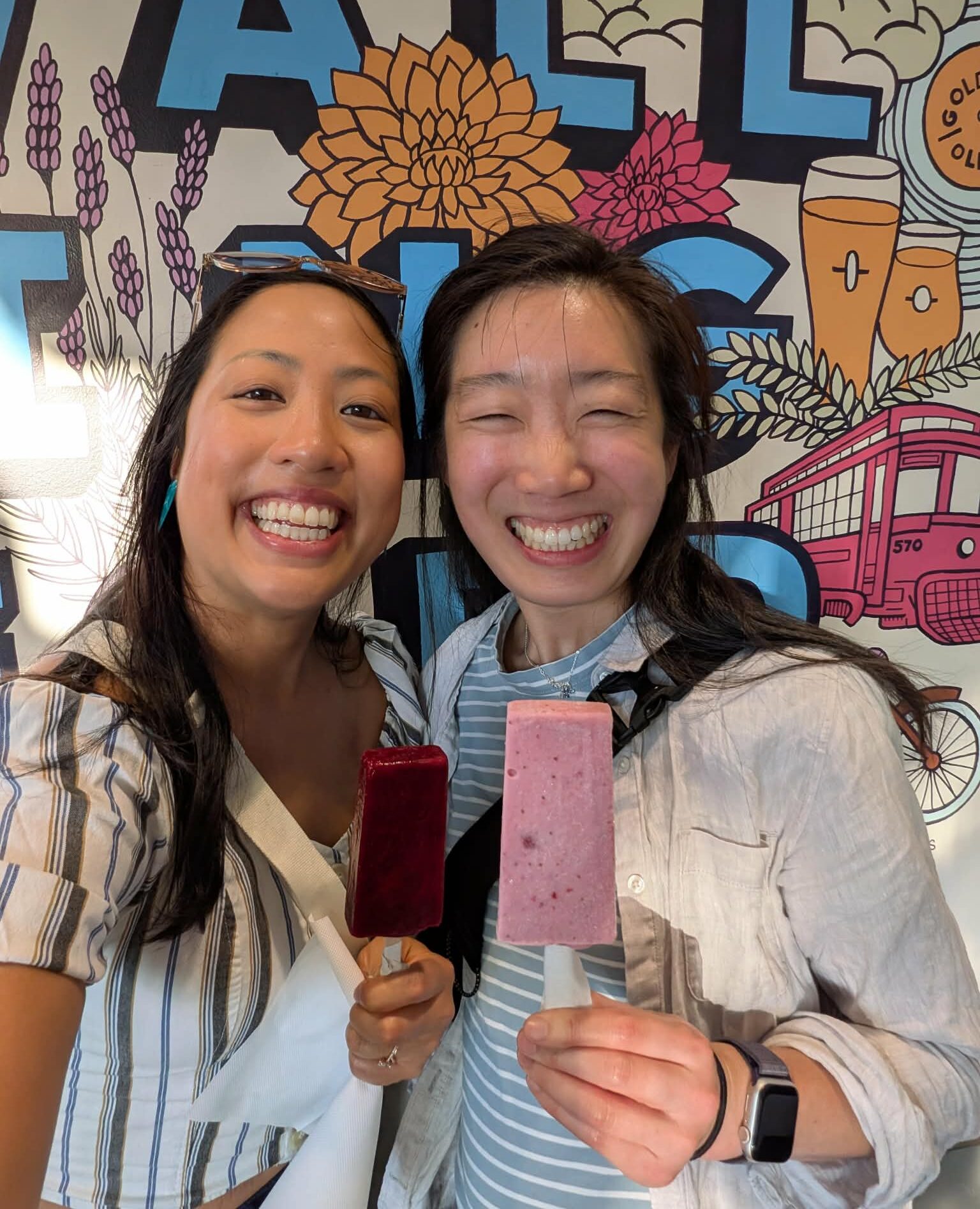
Nhu-San and Emily
“Everything Changed.”
Cancer became deeply personal for Emily in 2020 when one of her closest friends was diagnosed with breast cancer in her late 20s.
The diagnosis came during the uncertainty of the COVID-19 pandemic, adding another layer of complexity to an already overwhelming situation. Questions about treatment, appointments and support systems suddenly became much harder to answer.
What made the experience even more striking was the unique perspective the two friends shared. As a research scientist, Emily was familiar with interpreting scientific literature. Her friend, Nhu-San, worked in healthcare directly with patients. Yet despite their combined expertise, they found themselves confronting how much is still unknown about this prevalent disease.
“Between the two of us, there were still so many gaps in understanding,” Emily said. “But at the same time, it was motivating to see that there are a lot of areas that we can continue to advance in cancer research and how important it is. That’s why hearing about a cause such as the V Foundation and its investment in research with such a broad scope was really exciting to me.”
Nhu-San’s diagnosis also uncovered a hereditary BRCA mutation that affected the entire family, reminding Emily how cancer’s impact extends far beyond a single patient.
Thankfully, her story has a hopeful ending.
“I’m really happy to report that my good friend is now a cancer survivor,” Emily says. “But I know that’s not the case for a lot of people and it really stopped me in my tracks. For someone who lived such a healthy life and loved to travel and explore – suddenly everything changed.”
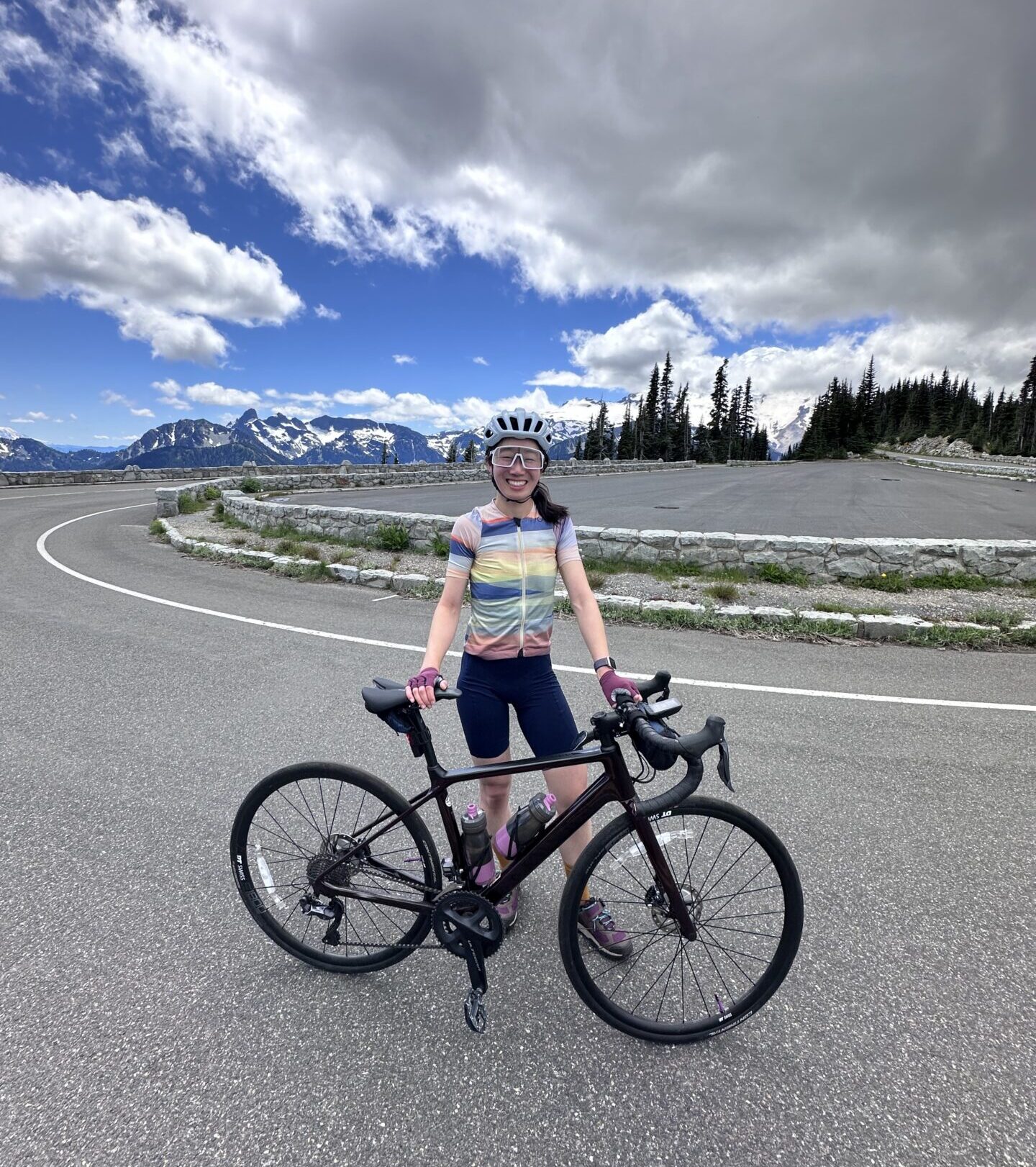
Riding with a Scientist’s Perspective
Emily’s career as a scientist at Bristol Myers Squibb has given her a firsthand understanding of what it takes to move promising science from an idea to a future treatment. That experience also gives her a unique appreciation for the V Foundation’s mission.
“One thing that really stands out about the V Foundation is that the funding here is for a lot of high-risk and very interdisciplinary work,” she says. “Cancer is so incredibly complex – from basic research to patient trials, every piece plays an important role.”
Unlike funding focused on a single disease or narrow specialty, Emily values the V Foundation’s commitment to supporting research across the entire cancer continuum and investing in ideas that might otherwise struggle to find funding.
“You have to think really long-term,” she explained. “The work you do today may not see the light of day for many years or even decades, but those discoveries are very exciting as a researcher and will hopefully be life-changing for patients in the future.”
She also understands how transformational grant awards can be for early-career investigators.
“To know that there is funding to support and invest in really high-quality, high-impact, high-risk research allows scientists to spend more time on aspects of the work that are important,” Emily said. “You can really focus on the research, build your team, and address a lot of challenging questions.”
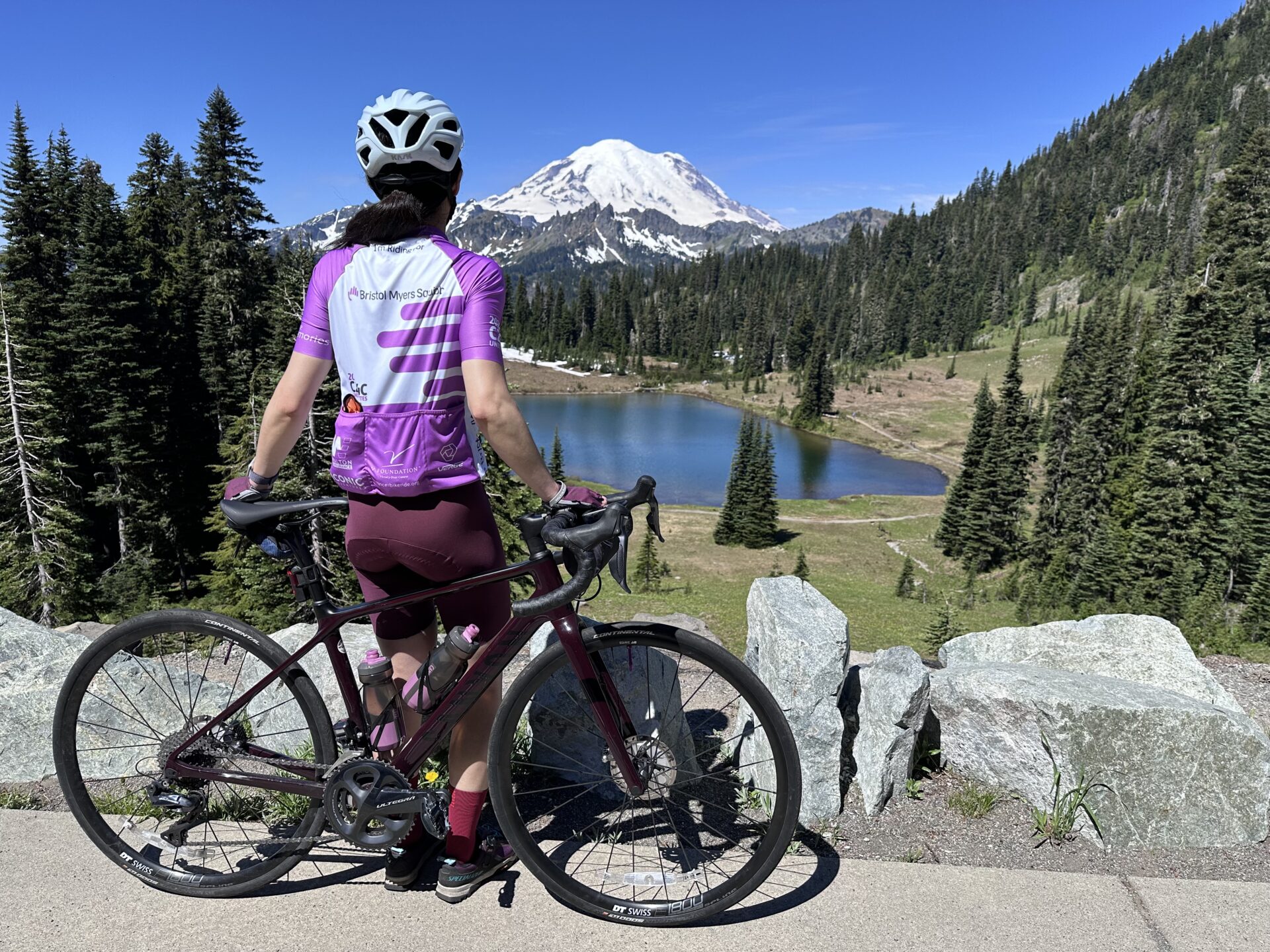
A New Kind of Challenge
While C2C4C is Emily’s first charity ride, cycling has been a significant part of her life since graduate school.
She first began regularly cycling in 2020 when it became one of the safest ways to get around Seattle with limited public transportation options during the pandemic. Today, she bikes seven miles each way to work through the city and regularly explores mountain rides throughout the greater Pacific Northwest. “We live in a beautiful area here, so in the morning I get to wake up and ride with a mountain view – that’s definitely a privilege.”
Still, riding from Salt Lake City to Denver presents an entirely different landscape.
“We’re going to be at high altitude. We’re going to be in an area I’ve never explored before. So, it’s an exciting challenge I’m looking forward to taking on.”
The physical training has pushed her in new ways. For the first time, she’s following a structured coaching plan, but perhaps the biggest surprise has been discovering the strength of the team around her.
“Everyone told me the training journey would be transformative, but it’s been a powerful inspiration that’s hard to capture in words,” Emily said.
Accustomed to riding independently or in small groups, she has embraced the camaraderie of her team, Climbing for a Cure, as the riders have grown stronger together over months of training.
“We figured out how to ride as a group, kind of moving as one,” she says. “The team aspect has just really been phenomenal.”
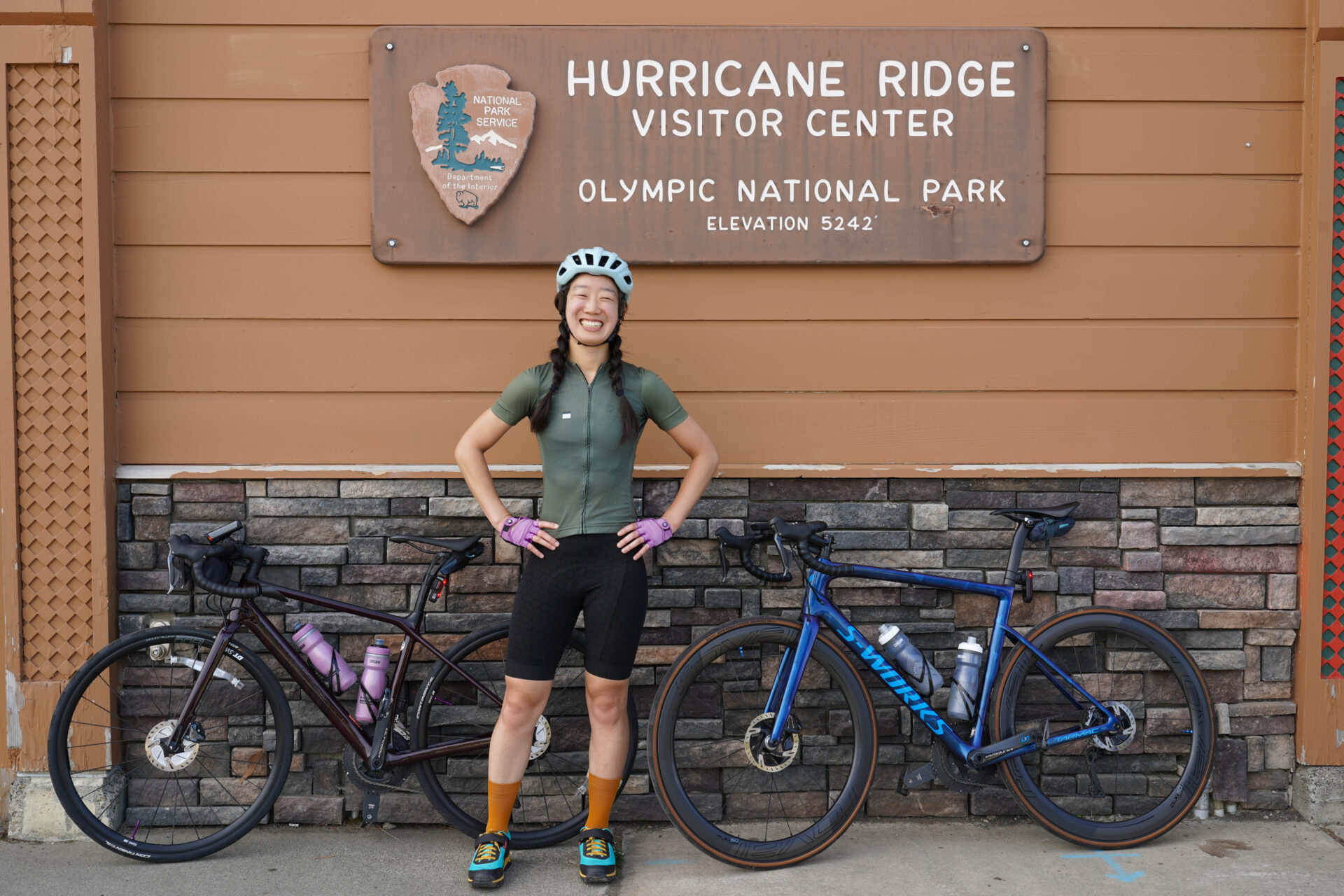
A Long-Lasting Ripple Effect
Throughout her training journey, fundraising has also become an unexpected source of inspiration.
As Emily has shared her motivation for riding, friends and colleagues have responded by sharing their own cancer-connected stories, many for the very first time.
“I’m just very grateful that so many folks have been willing to be so vulnerable. It’s sparked a lot of moving conversations.”
Those conversations reinforce what motivates her every time training gets difficult.
“The motivation for this ride is just so different,” Emily said. “The impact you make has a ripple effect. I have the privilege to ride for my friend and now I’m also honoring those who have made a special impact on the lives of my colleagues and friends. Additionally, this is an investment in the future careers of researchers and the lives of future patients. There’s so much meaning to this ride.”
“Yes, it’s hard today, but can you imagine how much impact this will have in the long term?”
For Emily, C2C4C isn’t simply about reaching her final stop in Denver and handing off to the next team to continue the journey. It’s about helping ensure that the next person facing a cancer diagnosis has more answers, better treatments and more hope than the last. Every mile she rides is an investment in that future.