Skip to content
The V Foundation logo
Donate
  • About Us
  • Stories
  • Research
  • Events & Fundraisers
  • How to Help
  • Donate
  • Home
  • About Us
    • About Us
    • Our Story
    • Leadership & Collaboration
    • Financial Responsibility
    • Partners
    • Diversity, Equity & Inclusion
    • Careers
  • Stories
    • All
    • Inspiration
    • News
    • Team Science
    • V Ambassadors
    • Video & Podcasts
  • Research
    • Research Overview
    • Award Programs
    • Funded Grants
    • Grant Selection Process
    • Special Funds
  • Events & Fundraisers
    • Events & Fundraisers
    • Events Calendar
    • Signature Events
    • Run For Team V
    • Fundraise for the V
    • Fundraising Friends
  • How to Help
    • How to Help
    • Ways to Give
    • Honors and Memorials
    • Shop the V

The Latest

Next Generation of Leaders Accelerate Victory Over Cancer® with $280,000 Raised at Victory Gala in NYC

Read more

A Family Affair: Supporting Cancer Research

Read more

The V Foundation for Cancer Research Announces New Cohort of Translational Grant Recipients

Read more

The 21st Annual Dick Vitale Gala Announces Over $120 Million Raised For The V Foundation’s Dick Vitale Pediatric Cancer Research Fund

Read more
View All

About the Foundation

  • About Us
  • Our Story
  • Leadership & Collaboration
  • Partners
  • Financial Responsibility
  • Diversity, Equity and Inclusion
  • Careers
  • Cookie Policy

How to Help

  • How to Help
  • Ways to Give
  • Honors and Memorials

Research

  • Research Overview
  • Award Programs
  • Grant Selection Process
  • Funded Grants
  • Special Funds
  • Researcher Resources

Stories

  • All
  • Inspiration
  • Team Science
  • V Ambassadors
  • Video & Podcasts
  • News

Events & Fundraisers

  • Events & Fundraisers
  • Events Calendar
  • Signature Events
  • Run For Team V
  • Fundraise for the V
  • Fundraising Friends

For Patients

  • Patient Resources

Tags: Blog|Featured

Meet JJ: Son, Brother, Athlete and Leukemia Fighter

Meet JJ: Son, Brother, Athlete and Leukemia Fighter

JJ Rothfuss is one of a kind. He’s one of 83 million children in the United States. He’s one of three million youth baseball players. And, he is one of 15,000 children who were diagnosed with cancer in 2021.

When asked to describe her oldest son, 8-year-old JJ, the first word that came to Amber Walker’s mind was ‘caring’.

“The number one thing is he is very caring,” Amber said. “He cares about people before himself. He’s wise beyond his years. He always was beyond his years, but I think this [his cancer battle] makes him more wise.”

Then, an anecdote about JJ’s pet bunny named Hoppus, but we’ll get to that part of the story later.

SUDDEN DIAGNOSIS

One Monday afternoon JJ wasn’t feeling well so his mom took him to the doctor’s office. She thought it might have been a cold, while the pediatrician suggested testing for mono. The results of the test were life-altering as JJ was diagnosed with leukemia – a common childhood cancer.

A whirlwind of activity followed the diagnosis. JJ was admitted to Golisano Children’s Hospital in his hometown of Rochester, N.Y., and started chemotherapy less than 48 hours later – an unfathomable change in such a short amount of time.

Once there, he underwent genetic testing and was diagnosed with the rarer children’s leukemia, acute myeloid leukemia. The treatment plan was four cycles of in-patient chemotherapy.

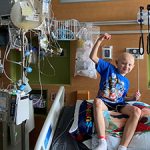
“It was five months pretty much straight in the hospital from April to September,” Amber said. “If his blood looked ok, he could come home very restricted from people. For the most part, it was 30 days in the hospital, a couple days at home and then go back for another 30 days.”

At Golisano, JJ fought through chemotherapy. He lost a lot of weight and muscle early in the process, but after adjusting to the treatments, he started eating more and building his strength.

SUPPORT AND CARING
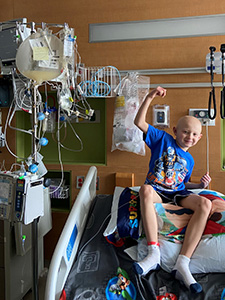
With COVID-19 regulations, JJ’s only visitors early on were his parents, Amber Walker and Jamie Rothfuss. After a couple of months, the regulations changed, and he was able to see a couple of his grandparents as well. This helped brighten JJ’s spirits while also assisting his parents, as they were able to spend time at home and with their youngest son, Henry.

Throughout treatment, JJ built strong relationships with the nurses and caregivers who took care of him. He remained full of spirit and positive.

“He always says that he wants to go back and see nurses,” Amber said, with a smile on her face. “It’s a testament to how amazing the people on our floor were. He loves them. He has no fear of any of it because they did such a good job taking care of him.”

AMERICA’S (AND JJ’S) PASTIME

Before his diagnosis, JJ and his teammates were counting down the days to the 2021 baseball season. After missing the entire 2020 season due to the COVID-19 pandemic, it was going to be an important ‘catch-up’ season for all. JJ was only able to attend one practice before his diagnosis and admission to the hospital — no baseball season was possible.
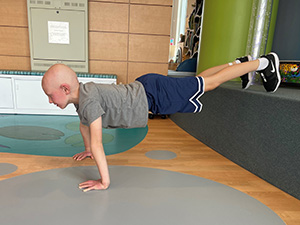
While in the hospital, things to do between treatments were limited. But JJ made the best of it with the help of his family and the nurses.

The hospital had one playroom on his floor, which could be reserved for one hour per day due to pandemic regulations. The positive side of the regulation was that it meant that he was the only patient in the room, and he and his dad had space to practice.

JJ was adamant about keeping up his skills through his treatment. He and his dad, Jamie, worked hard on his skills and worked to keep his strength, playing catch in the playroom.

JJ inherited his love for baseball from his dad. They are both big fans of the Yankees, and Giancarlo Stanton is JJ’s favorite player. When Jamie was in the hospital, they were likely doing one of three things – practicing baseball in the playroom, playing a spiderman video game or watching baseball.

“For all the Sunday Night Baseball games that the Yankees were on we would put the window shade down and use that as a projector screen,” Jamie said. “We would darken the room and put it on the shade. That was really cool – it was like our own movie theatre.”

Although apart from the Little League team in 2021, JJ kept up with them. His team wore ribbons on the sleeves of their jerseys to honor him.
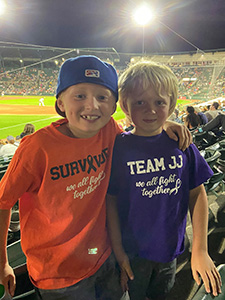
JJ saw the field once in the 2021 season. His oncologist cleared him to join his team in a game one afternoon during a chemotherapy break.

Even better, last month, JJ wrapped up the 2022 baseball season. He had a great support system that encouraged him throughout the season. Even some of his nurses at Golisano came to his games.

All of his hard work and dedication throughout treatment paid off, as he was able to compete at a higher level without skipping a beat and made the local travel ball team, the Penfield Crimson Pride. He played all across the diamond, showing his versatility and honing different skills. “It’s been a lot of work,” Jamie said. “He’s put in a lot of side work this summer. He loves it and is one of the hardest working kids, and it shows off too.”

Next comes hockey season, then the countdown for the 2023 baseball season will begin.

HOME SWEET HOME

After five months of chemotherapy treatments, JJ returned home. His scans are clear and he has returned to school, sports and playing with his younger brother Henry. He and his family celebrated with a trip to Disney World.

In December, three months after returning home from the hospital, the Rothfuss family was watching their beloved Syracuse Orange play Villanova in the Jimmy V Classic on ESPN. That is when they heard about the V Foundation for the first time, leading them to donate and share their story.

“You never realize how serious it is for the families that [cancer] impacts until you live it,” Jamie said. “That was one of the biggest things for us last year and why we wanted to donate and promote it to our friends and family too.”

JJ and his family look forward to celebrating his one-year anniversary of being in remission over Labor Day weekend. Each year comes with a smaller chance of relapsing.

Now at home, with things seemingly back to normal, JJ remains the caring and thoughtful person he was in the hospital.

Now we’ll get to the bunny story.

JJ had been asking his parents for a pet bunny for a while prior to his diagnosis and hospital stay. While he was in the hospital and preparing to come home, his parents consented. His parents told him he was going to be the main caregiver for the pet, and he agreed to it.

So, they went to online to a rescue organization’s website where there seemed to be tons of options for pet bunnies looking for homes. Many were young, energetic, fun bunnies, which most children would immediately choose to take home.

Instead, JJ picked a special bunny – it was older and only had one eye.

After being in the hospital for nearly five months through chemotherapy treatments and being cared for by incredible nurses, he picked the bunny he could care for himself.

Donate Today
Meet Noah: Brain Cancer Survivor Inspired By Tom Brady

Meet Noah: Brain Cancer Survivor Inspired By Tom Brady

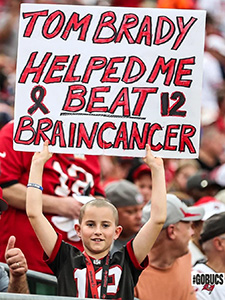
If you are a Tampa Bay Buccaneers fan, or an NFL fan in general, you may know part of Noah Reeb’s story. You might have seen him in the front row of Raymond James Stadium in October holding a sign that read, “TOM BRADY HELPED ME BEAT BRAIN CANCER.” 
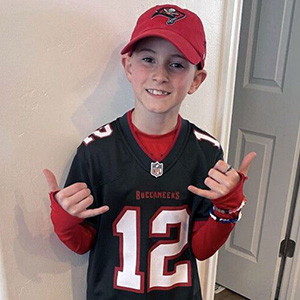
To you, his story started there. But really, it started long before that Sunday in Tampa Bay.

Noah was living a “normal” life in Utah, thriving in elementary school and playing flag and tackle football. He started as quarterback alternating as a wide receiver for his teams. His true love and passion is playing quarterback like his idol – Tampa Bay quarterback Tom Brady. Then, suddenly his entire world was turned upside down in February 2021.

First, his mom noticed he started having migraines. She had a feeling something was off and took him to multiple doctors in search of answers. Then, an intensive scan revealed a mass in the center of his brain, confirming it was cancer. Noah was rushed to the hospital immediately.

“The words that you have cancer are the scariest thing that could possibly happen to you,” Noah said. “But as you progress in treatment, you learn so much and see what kids have been going through for a long time. When you come out of it, it is the biggest achievement you have made.”

Noah went through four operations and chemotherapy to fight the cancer. It was a long, tough journey with many hours in the hospital. He credits his attitude that helped him get through the treatments, with the same mantra that Jim Valvano spoke at the 1993 ESPYS.

“You have to have faith and know it is your attitude that can get you through – don’t ever give up,” Noah said.

Between treatments, football took his mind off what was going on and made him happy. Whenever he could, he would toss the football in his yard or in the halls of the hospital to have a break from his reality. He continued to play quarterback with his flag football team during chemotherapy.

FINDING INSPIRATION

After his second brain surgery, Noah had just come from the operating room and was recovering in the Pediatric Intensive Care Unit. He was in incredible pain as the anesthesia began to wear off. In order to monitor his brain activity, he wasn’t immediately given follow up pain medication. The pressure and pain in his head were unbearable.

Because of COVID, only one parent at a time was allowed in the room with him. Noah’s mom Jacque went first. She held a cool washcloth to his forehead, spoke softly and breathed with him through his wails and sobs. With her mother’s touch she was finally able to calm him and get him to rest. Noah’s dad James who was waiting in the hall could only watch and listen from a distance as the automatic doors to the PICU opened and shut with the coming and going of caregivers.

When Jacque came out and James was allowed in, he found Noah resting peacefully. He stood at the foot of his bed. Not wanting to wake him, he waited quietly and considered what he might do to help him while he listened to Noah breathing between the beeps and humming of the medical equipment.

When Noah opened his eyes and saw his dad, he almost inaudibly croaked with a scratchy voice, “Hi Dad”. James whispered back, “Hi son, do you need anything? Water? Ice? Another pillow?” Noah answered, “No dad, I just want one thing please?” “Anything,” James said. Noah tried to clear his throat and then said slowly, “I just really need to watch highlight videos of Tom Brady.”

Noah is one of Brady’s biggest fans. As a fellow quarterback, he has watched and learned some of the skills of the position through Brady’s highlights.
One afternoon on the way home from treatment, Noah was having a tough day. He was still in the car crying and just feeling down. His mom was in the car with him, and her phone dinged. It was a video message from Brady. Brady greeted him and told him he was pulling for him through treatment.

“It was the most awesome thing that has happened,” Noah said. “I was so low and then that video popped up and I was so happy.”

Following that moment, Noah’s parents made a promise. After treatments, and once he was well enough, they would take him to watch Brady play live at a real home game in Tampa at Raymond James Stadium. And that is what they did.

After eight long months, the Reebs purchased an unlikely pair of third row tickets that unexpectedly went up for sale at the last minute for the Buccaneers and Chicago Bears game on October 24, 2021. Noah’s mom could not come, but he and his dad attended the game and got to watch the Buccaneers defeat the Bears, 38-3.

The most meaningful part of the game was before the first snap. The father-son duo was in the first row behind the home bench. Noah was holding his handwritten sign over his head, the sign they almost left in the hotel room. Noah simply wanted to somehow tell Tom Brady thank you for the support he gave him during treatment. Because Noah had written the message on both sides of his sign, and because countless others have been affected by cancer, it was easy for fans to cheer for Noah and try to draw Brady’s attention to the ten-year-old survivor.

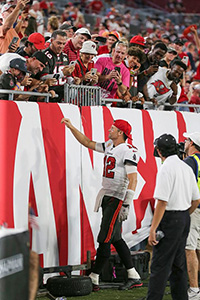
It took nearly the entire game but finally and unbelievably Tampa players began to notice Noah. First defensive players William Gholston, Jason Pierre-Paul and others, and then somehow, wide receiver Chris Godwin saw what was happening. He came over and congratulated Noah, gave him his game gloves and shook his hand. As he walked away, he stopped for a moment and said, “Hey Noah, I got you.” He then went immediately to Brady to get him to wave at Noah.
That’s when the unimaginable happened. Brady stood up, saw the sign and Noah, grabbed a hat, and actually went to meet him. He put the hat on Noah’s still-shaved and scarred head and shook his hand. An incredibly unlikely storybook moment for a young boy and all those around him after a long, arduous journey.

GETTING CONNECTED WITH THE V

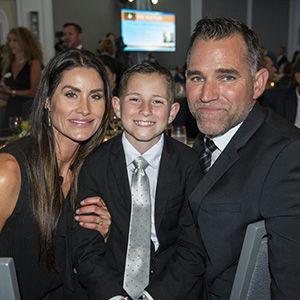
Noah and his family were connected with the V Foundation for Cancer Research as they attended the Dick Vitale Gala in May. He is officially cancer-free with his recent scans being clear.

“It [cancer research] means that we will eventually find a cure for cancer, and this [harsh cancer treatment] won’t have to happen anymore,” Noah said.

Noah was one of the brave individuals honored at the gala in the Dick Vitale All-Courageous team.

“It’s awesome that Dick Vitale can do all this for pediatric cancer patients,” Noah said. “I think it’s cool that we can raise $11 million in just one year. I had so much fun being there and getting to meet other kids who have gone through the same thing as me and who have fought cancer.”
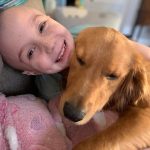
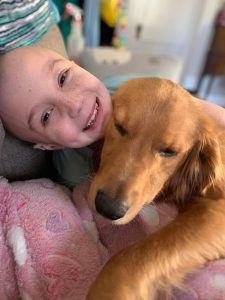
Noah’s relationship with Brady and the Buccaneers continued past the game in October.

In January, Noah was surrounded by family in his home in Utah when he received another video from Brady. This time Brady, the Buccaneers and the NFL partnered to send Noah and his family to the 2022 Super Bowl.

“It was awesome,” Noah said of the Super Bowl. “I got to meet some players and it was a great game.”

Football remains one of his favorite pursuits. He aspires to be an NFL quarterback when he grows up. He loves the position because it requires leadership, dependability and someone who teammates look up to.

Noah’s scans remain clear and he feels good. He continues to share his story in hopes that it can inspire and give hope to children and their families who are in cancer battles. Noah believes in his own words, “Champions are made in the fourth quarter.” To him this means that no matter the odds or the time on the clock, you must always fight, you must never quit.

“You have to keep moving on with your life and keep progressing,” Noah said. “Keep being positive. You have to know, ‘Hey I am going to beat this.’”

More of Noah’s story can be found on the Voices For Victory podcast.

Donate Today

Meet Harper: Nine-Year-Old Leukemia Fighter and Fundraiser

Meet Harper: Nine-Year-Old Leukemia Fighter and Fundraiser

Harper is a nine-year-old who swims, rides bikes, loves animals, and dabbles in fashion.

She is also one of the more than 15,000 U.S. children diagnosed with pediatric cancer in 2021. But Harper is not a statistic. She is a little girl with a contagious smile and a huge heart. While undergoing treatment for leukemia, she decided to nurture something positive out of something very scary. Early in her treatment she planted a seed that has blossomed into more than $24,000 donated to cancer research.

Every word Heather Hindin uses to describe her daughter is filled with warmth, admiration, and awe.
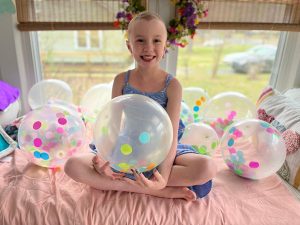
“Harper is such a kind and thoughtful friend. She is articulate and passionate and around kids her age, she is empathetic and solves problems,” said Heather. “She has made a lot of friends at Duke, spending time with younger kids. And she is well known for making personalized get-well cards and doing laps with others on their unit.”

Leukemia Diagnosis

In 2021, just after school returned to in-person instruction, Harper would come home with headaches, and she was falling asleep a lot. It looked like something the pediatrician had seen in lots of kids who were getting back to a more normal school routine. But Harper didn’t adjust like other kids, and her symptoms didn’t improve.

While on a short getaway, her mom noticed dark circles under her eyes and an indescribable fatigue. Harper was just not herself. While they were playing with make-up, Heather noticed several swollen lymph nodes and asked Harper’s doctor for some blood work to be drawn. The results were startling.

“We’re deciding if Harper needs to come to the emergency department tonight or if we can meet you there tomorrow,” the nurse practitioner told Heather over the phone. They ultimately decided that Harper could spend the night at home. They gave her mom a list of things to watch for and Heather experienced one of the longest nights of her life.

“I called my parents to come to town. I knew what it was. A little after 10:00 that morning, the medical team came in and told us it was leukemia. A lot of what happened after that is a blur to me. She immediately needed a blood transfusion – her biopsy was almost entirely leukemia – that’s how bad it was,” Heather recalled.

“Harper asked if she was going to die. I told her she wasn’t, then she asked if she was going to lose all of her hair. Those are the two of the things I remember most clearly. We had an immediate transition from hearing that she had cancer to having social workers and child life specialists help facilitate our move to the inpatient setting. We didn’t leave the hospital for 9 days.”

How Donations and Research Are Giving Harper and Other Leukemia Fighters Hope

Harper’s team set a plan for treatment, and even when they veered a little off course, the goal remained the same – Victory Over Cancer®..

Research has driven remarkable progress, with pediatric leukemia deaths dropping by 70% from 1975 to 2016. Thanks to this research, children have better treatment options and are thriving. Achieving these breakthroughs requires sustained research, and every donation to leukemia research plays a crucial role in funding the science that saves lives.

Harper’s Fundraising Success: Turning Her Leukemia Diagnosis into a Call for Donations

“Harper received a package from Coach K [retired Duke basketball coach, family friend, and V Foundation board member Mike Krzyzewski] when she was diagnosed,” said Heather. “We talked about how people take bad things and make good things out of them. We started every night saying things we are grateful for. We have the resources we need, and she has an informed advocate. So we started talking about ways to give back. She is an amazing person. She is so kind and selfless. It’s incomprehensible that she is going through all this and still wants to help people. Research is so meaningful to us. Those leaps and bounds [in survival rates] could not be possible without research and funding for research. We decided we wanted to further that research.”

Harper hosted a fundraising campaign selling t-shirts that was wildly successful. With the money raised, she chose to support research funded by the V Foundation. Because of her hard work and generosity – and the hard work and generosity of so many V Foundation supporters – we are funding the science that is saving lives, including Harper’s.

Heather’s sister had a friend with the same type of cancer as Harper, and she was diagnosed more than 25 years ago. There were not as many options for her, and sadly, she passed away. That memory has stayed with the family and motivated them. They want to make a difference. Today, outcomes are changing because we are advancing research. Kids like Harper are bravely facing and beating cancer.

Today, outcomes are changing because we are advancing research. Kids like Harper are bravely facing and beating cancer.

Donate Today


New Insights into BRCA Mutations Could Lead to Better Screening Tests

New Insights into BRCA Mutations Could Lead to Better Screening Tests

As many people with a family history of cancer know all too well, inheriting a mutation in the BRCA1 or BRCA2 genes dramatically increases cancer risk. People with these mutations can be 75% more likely to develop breast cancer during their lifetime and also face a higher risk of ovarian and prostate cancer. In hopes of catching cancer early, people with BRCA mutations typically undergo extra mammograms and screening procedures and some even elect to have risk-reducing surgeries such as mastectomies.

With V Foundation funding, Karlene A. Cimprich, PhD, from Stanford Cancer Institute is making new discoveries about how BRCA mutations lead to cancer. Her work is revealing potential new therapeutic targets for BRCA-related tumors and laying the groundwork for a new blood test to catch cancer sooner.

“Individuals with BRCA mutations frequently get cancers earlier in life,” said Cimprich. “We want to understand what drives this process, including what the BRCA genes do normally that isn’t taking place when mutations are present, and how this leads to early development of cancer.”

Escaping the nucleus

It all began years ago when Cimprich and her colleagues discovered something odd that occasionally happens inside the cell nucleus, the place where cells extract information from DNA to make proteins that keep the cell running. Normally, cells make RNA in the nucleus and then shuttle it out to the cytoplasm to serve as a template for making proteins. However, Cimprich found that under certain conditions RNA gets tangled with DNA in the nucleus, creating a structure called an R-loop.

If the cell doesn’t catch and correct this mistake, it can damage the DNA. After Cimprich’s discovery, another research group found that the BRCA1 and BRCA2 genes help stop R-loops from forming. This suggests BRCA mutations could allow R-loops to accumulate, leading to DNA damage.

Studying cells that lack normal BRCA1 and BRCA genes, Cimprich and her colleagues made another surprising discovery: in these cells, R-loops were not only found in the nucleus but also in the cell’s cytoplasm. The researchers gave these errant sections of DNA and RNA floating around the cytoplasm a name that sounds like science fiction: “cytoplasmic hybrids.”

Understanding harmful hybrids

The V Foundation awarded the team funding to find out where cytoplasmic hybrids come from, why they form and how they affect cell function. In the process, the researchers developed new imaging tools and new methods for isolating and genetically sequencing the hybrids.

“These cytoplasmic hybrids have never been reported before,” Cimprich said. “We not only showed they exist but developed ways to observe and characterize them.”

The researchers found that cytoplasmic hybrids activate an immune response that eventually leads to cell death. “This was a surprising finding and means that it might be possible to develop therapies that help boost this immune response in patients with BRCA1 or BRCA2 mutations,” Cimprich said. “We’re now working to better understand this immune response and how cancer cells have figured out how to evade this cell death.”

Easier screening

The researchers are also working on developing a way to isolate these cytoplasmic hybrids in blood. This could make it possible to develop a blood test that would offer a less invasive, more cost-efficient way of screening for BRCA-linked cancer. Toward this goal, they are now beginning to analyze blood samples from volunteers to see how well they can detect the cytoplasmic hybrids in blood and whether their levels correlate with cancer progression and initiation. They suspect that levels of the hybrids increase as cancer starts to form.

Cimprich says that the V Foundation support was critical in helping her bring together a group of Stanford scientists from different fields, which inspired new ideas and approaches. For example, Jim Ford, a geneticist and medical oncologist, encouraged the group to look for the cytoplasmic hybrids in blood. Also, team member Aaron Straight’s expertise in imaging was instrumental in figuring out how to visualize the cytoplasmic hybrids.

She also credits the V Foundation for being willing to take on a project that was high risk because it was different and new. “Our results were not exactly what we expected, but what we found out was still very new and exciting,” Cimprich said. “These findings are now driving much of the new research in my lab.”

Dick Vitale’s 2022 ESPYS Speech

Dick Vitale’s 2022 ESPYS Speech
Silently, the whole room rose to its feet.

“I will tell you this Jimmy V, my man, we are not going to stop chasing the dream of raising dollars and your dream, Jimmy’s dream, to beat cancer. We must do it. Because it doesn’t discriminate. It comes after all … Take a look at the room. It doesn’t matter — race, religion. It will bring you to your knees. There is only one way to beat it, my friends. We have to raise dollars and give the oncologists a fighting chance.”

Keep chasing your dreams!! You’re an inspiration to us all @DickieV @TheVFoundation https://t.co/K4KMypqvI0 pic.twitter.com/hsNeertPDq

— Stephen Curry (@StephenCurry30) July 21, 2022

Vitale’s speech was an inspiration, drawing social media reactions from notable names in the sports world, such as Stephen Curry, Jay Bilas, Jeff Goodman, Todd McShay and many others.

Following the ESPYS, Vitale penned a thank-you letter. Even then, his dedication to raising money for cancer research rang through. “We need even more dollars to beat this dreaded disease. We have made great strides, but there is a lot more work ahead. If you can donate, please give to the V Foundation.”

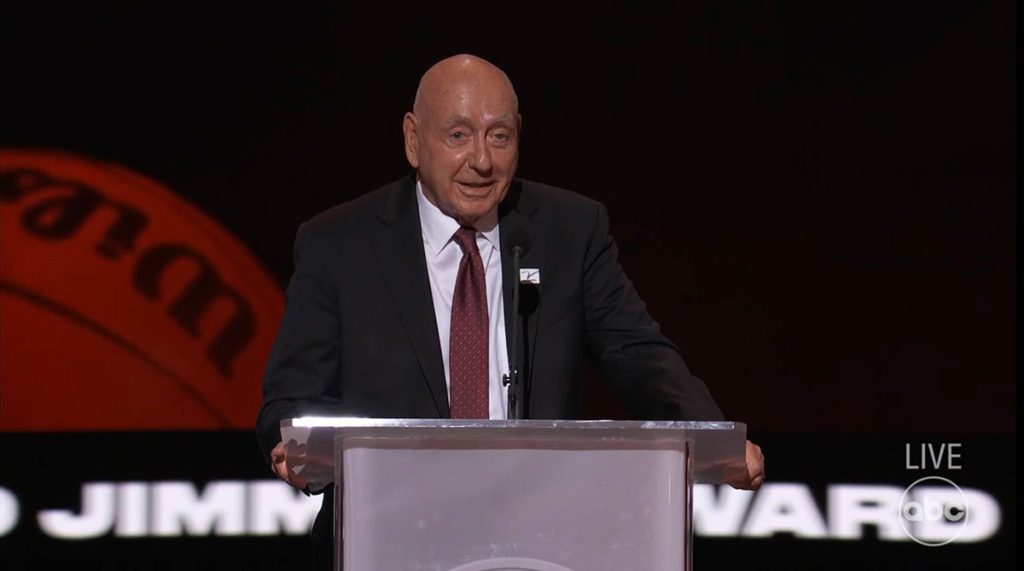
Vitale has been a champion for pediatric research for over 20 years. Through his efforts, the Dick Vitale Pediatric Cancer Research Fund at the V Foundation has awarded nearly $60 million to fund pediatric research. His commitment to cancer research, and the inspiration he provided during his own cancer journey, led him to the same ESPYS stage he helped his friend, Jimmy V, walk up to in 1993. Nearly 30 years later, Dickie V accepted the Jimmy V Award for Perseverance.

His passion for the mission of achieving Victory Over Cancer stood out the most. Vitale emotionally recalled the names of courageous children battling cancer who make up the Dick Vitale All-Courageous Team. And he continually traced his thoughts back to his great friend.
“What a legacy. A legacy that you can have an unbelievable effect on so many people battling cancer. And that is what Jimmy has done. Save lives. He will go on generation after generation and that is a great legacy to have.”

“They [the V Foundation] want to help others. No kid or child should be doing chemo and radiation. I have dedicated myself to that point. As they said, we raised $55 million. It is not enough.”

It’s not enough, which is why two of Dick’s good friends, Mark and Cindy Pentecost, founders of It Works!, are matching all donations, up to $1 million, to support the Dick Vitale Pediatric Cancer Research Fund.

You can join the challenge by going to www.v.org/pediatric-match.

During his address to the ESPYS crowd and the world, Vitale did what he does best and what he has been known for his entire career – he spoke from the heart. His good friend Jimmy V would be proud, and no doubt was proud, standing up from above to applaud his great friend for a job well done.

Flashback 29 years ago to the 1993 ESPYS Awards, the first of many. After introducing him, Vitale assisted his friend and colleague Jim Valvano to the stage to accept the Arthur Ashe Courage Award. Valvano had pleaded with them to get him on the stage although he was extremely sick. Vitale recalls thinking he was simply going to say, “thank you” and return to his seat.

Instead, Vitale stood beside his friend for the entirety of the iconic speech. The speech delivered by Valvano was unforgettable and introduced and inspired the work the V Foundation for Cancer Research would do for many years to come.

This story behind the amazing friendship between Dick Vitale and Jim Valvano is so heartwarming ❤️

Join Dickie V in the fight against cancer with a gift to @TheVFoundation: https://t.co/6NwFh3eOwi pic.twitter.com/gDhvJJ1NwD

— ESPN (@espn) July 21, 2022

This year, Vitale stepped to the stage to accept the award with the assistance of his friend and former ESPN President George Bodenheimer, mirroring what he did for his friend almost three decades ago. Then, Vitale never thought that he would be in the position.

Vitale’s passion for the game of basketball was never questioned. Ever. He is one of the greatest color commentators of all time and his voice is iconic.

His speech touched on inspirations from the current sports world like Vitali Klitschko and Billie Jean King. Vitale even joked with Los Angeles Rams wide receiver Cooper Kupp about defeating his Tampa Bay Buccaneers in the Super Bowl.

“Tonight, I have been in awe,” Vitale said. “Awe. … I am in awe when I see Albert Pujols, Gretchen [Evans], or Vitali [Klitschko]. And if you’re not in awe, something’s wrong. I am in awe of all the athletes that are here today and the greatness that you possess. The greatness is unbelievable. You should be so proud.”

“There is one little formula that I believed in so much growing up as a kid. I was sitting there thinking about it and it really reflects what is in the room and what you are about. Passion. How many times did we hear the word passion today?”

A speech for the ages. pic.twitter.com/sLkB3k3wDW

— The V Foundation (@TheVFoundation) July 21, 2022

Donate Today


V Scholar Earns Prestigious Honor

V Scholar Earns Prestigious Honor

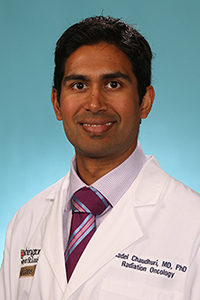
Only one person every year in the radiation biology field earns the honor that 2020 V Scholar Aadel Chaudhuri just received – the Michael Fry Research Award from the Radiation Research Society. The award honors the country’s most promising radiation biologists at the junior faculty level.

“When I found out, my reaction was that someone must have made a huge mistake,” Aadel said (laughing). “It is humbling to earn this honor.”

Chaudhuri, an assistant professor in radiation oncology and a physician scientist who treats lung cancer at Washington University in St. Louis, found out about the honor while he was leading a Zoom meeting – a Zoom meeting he had to eventually stop short of its fully scheduled time. His mentor, Charles Thomas Jr., MD, an ardent advocate for diversity and inclusion and Chief of the Section of Radiation Oncology at Dartmouth-Hitchcock’s Norris Cotton Cancer Center, texted him to break the news. Dr. Thomas is the person who nominated Aadel for the award, along with Dr. Dennis Hallahan at Washington University and Dr. Maximilian Diehn at Stanford.

Radiation oncology uses radiation to treat cancer. Radiation biology studies, in part, the health effects of radiation. Dr. Chaudhuri is learning more about the health effects of radiation through liquid biopsies, which takes a fluid like a blood sample to predict the risk of cancer recurrence by measuring if the patient who has been treated with radiation has any tumor DNA remaining in his or her body.

In his ideal future, Chaudhuri hopes a blood test will be able to determine if a patient has cancer or how well the tumor is responding to treatment, leading to more personalized treatments. Additionally, the blood test would be used post-treatment to assess the risk of the cancer coming back. Dr. Chaudhuri has shown in his research how circulating tumor DNA in the blood of localized lung cancer patients can be measured shortly after completing their radiation treatment. This helped start the field of solid tumor “molecular residual disease” (MRD), now proven to be a powerfully prognostic biomarker across several cancer types.

As part of the honor, Dr. Chaudhuri will speak at the Radiation Research Society’s 68th Annual Meeting in Hawaii in October, giving him the opportunity to share the difference he’s making in cancer research with both younger and established scientists from across the country.

Heading to Hawaii, in part thanks to his mentors, Dr. Charles Thomas Jr., Dr. Dennis Hallahan, and Dr. Maximilian Diehn

And that team approach is just one of the ways in which Dr. Chaudhuri sees how doctors like himself are a lot like the athletes we follow, the athletes who are a part of the V Foundation’s fabric and history.

“We have a competitive desire to overcome obstacles and make a positive difference in this world.”

A summary of Dr. Chaudhuri’s work through his V Foundation Scholar grant is available here.

A new direction to stop breast cancer from coming back

A new direction to stop breast cancer from coming back

About a third of all cancers diagnosed in women each year are breast cancers. The vast majority — 70% to 80% — of these tumors are estrogen receptor positive (ER+), which means they use the hormone estrogen to grow. Although ER+ breast cancer is often treatable with estrogen-blocking tamoxifen or other endocrine therapies, many patients eventually develop endocrine resistance that can lead to recurrence.

With funding from the V Foundation, Kexin Xu, PhD, from Mays Cancer Center at the University of Texas Health in San Antonio, is working to find new therapies that could circumvent this common form of treatment resistance and stop breast cancer from coming back. Her work may even uncover ways to make ER+ tumors more responsive to existing cancer treatments.


“About 30% to 40% of patients with localized ER+ tumors, and nearly all patients with ER+ metastatic breast cancer, will develop resistance to hormone therapies like tamoxifen,” said Xu. “This is why we’re very interested in finding new therapeutic options for patients with therapeutic-resistant breast cancer.”

Epigenetics could be key

At the heart of Xu’s strategy is an area of science called epigenetics that has gained substantial attention in cancer research. Epigenetic changes are chemical modifications that alter how genes are expressed without changing the genetic code. Because these changes are reversible, it is possible to use drugs to change cancer-linked epigenetic patterns back into normal patterns. In fact, drugs that work this way are already being used to treat other types of cancers.

“A lot of studies have suggested that epigenetic abnormalities play a very important role in the development of endocrine resistance,” said Xu. “Thus, we think epigenetics may represent a new direction for developing drugs for endocrine resistant ER+ breast cancer.”

In earlier work, Xu’s team identified an epigenetic enzyme called EZH2 as a very promising therapeutic target for treatment-resistant metastatic breast cancer. Experiments using an FDA-approved drug that inhibits EZH2-mediated epigenetic abberations also showed encouraging initial results.

For their V Foundation project, the researchers are digging deeper into how this drug works to put the brakes on breast cancer. They also developed a new breast cancer mouse model in which tissue from a patient with ER+ breast cancer is implanted into the mouse and moved from an endocrine sensitive to resistant status. Although they can be difficult to establish, this type of mouse model can be very useful for discovering and testing new therapies because the tumors are so similar to those found in patients.

Reversing treatment resistance

Using their new mouse model, Xu and colleagues found that the FDA-approved EZH2 inhibitor slowed the growth of ER+ breast tumors, especially tumors with endocrine resistance. They also observed that an EZH2-targeting drug can change the tumor microenvironment in a way that may make ER+ breast cancer more responsive to immunotherapy, a type of treatment that stimulates the body’s own immune system to attack cancer.

“This is an exciting finding because ER+ cancers usually don’t respond to immunotherapy,” said Xu. “We are now studying how these EZH2 inhibitors might synergize with immune checkpoint inhibitors to block the endocrine resistant breast cancer. Since both therapies are already FDA-approved, this combination therapy could move quickly into clinical testing.”

The researchers also developed new EZH2 inhibitors that show stronger effects against endocrine resistant breast cancer than the currently approved ones. They plan to use their new mouse models to test these promising drugs further.

“The support from V Foundation was key for developing the new models, which are an invaluable system for not only testing EZH2 inhibitors but also some other promising treatments,” said Xu. “This gives our lab a very unique tool that puts us in a priority position to carry out certain types of research.”

Xu says that the V Foundation support also allowed her team to collect the preliminary data necessary to expand into new research areas and gain new funding resources. This data has already helped them secure funding from the NIH, the Susan G. Komen Breast Cancer Foundation and the Mays Cancer Center.

To help fund important breast cancer research through the V Foundation, give through our Clea Shearer Breast Cancer Research Fund.

Brightening the outlook for childhood cancer survivors

Brightening the outlook for childhood cancer survivors

Thanks to new treatments, survival rates for children with cancer are high. However, the treatments they receive put them at higher risk for a variety of chronic health conditions later in life — a risk that is unfortunately amplified for those with socioeconomic disadvantages.

With V Foundation funding, Zhaoming Wang, Ph.D., and I-Chan Huang, Ph.D., from St. Jude Children’s Research Hospital are working to better understand the role of socioeconomic status in health problems among adult survivors of childhood cancer. This work could lead to new ways to help these survivors stay healthy throughout their lives.

Zhaoming Wang, Ph.D.
I-Chan Huang, Ph.D.

“Most cancer survivorship research focuses on documenting the long-term toxicity of cancer treatment,” explained Wang. “We are among the first to look at the biological causes of health disparities in childhood cancer survivors. This group is vulnerable because they age faster, which means that chronic health conditions affect them even earlier. Someone who had cancer treatment as a child might have a heart attack in their thirties, for example.”

In pioneering new work, the researchers are using the concept of social epigenetics to study how social factors and cancer treatment work together to change the way a person’s genes are expressed. By helping to reveal the biological mechanisms behind these disparities, researchers hope to find ways to identify those at highest risk and intervene to reduce or prevent the chronic health conditions they face.

A unique clinical resource

The new research draws on the St. Jude Lifetime Cohort, a clinical cohort St. Jude Children’s Research Hospital established to follow its pediatric cancer patients over their lifetimes. The approximately 6,000 patients and survivors currently enrolled in the cohort visit the clinic every few years for comprehensive medical assessments that include blood draws, physical performance tests, neuro-psychological assessments and more.

“Our study wouldn’t be possible without the data from this group of patients, which is one of the largest cohorts of this type in the country,” said Huang. “Thanks to the extensive assessments, we are able to examine more than 175 chronic health conditions, assess various socioeconomic factors and also conduct epigenetics analyses on stored blood samples.”

The researchers are studying a particular type of epigenetic change — a change to the genome that affects how genes are expressed — known as DNA methylation. For the first part of their project, they examined how cancer treatments affect DNA methylation and, subsequently, chronic health conditions. As published in a Genome Medicine paper, they identified thousands of DNA methylation sites that were affected by cancer treatment, especially radiation.

“This shows that the treatment leaves a permanent signature on the epigenome,” said Wang. “We also found that some of these changes are linked to cardiometabolic conditions, which helps explain why the treatment increases the risk of chronic health conditions.”

Next, they examined how each person’s education level, personal and household income, and neighborhood disadvantaged socioeconomic status correlated with DNA methylation patterns. For this study, published in an Epigenetics paper, they measured DNA methylation at about 1 million sites and found around 130 DNA methylation sites were correlated with these socioeconomic factors. For example, people with higher education had very different methylation signatures than those with less education. The researchers then began to take a closer look at these 130 socioeconomically linked markers to see if any were linked with chronic health conditions. This ongoing research suggests that some of these markers may mediate the association between socioeconomic factors and impaired lung function.

Closing the disparity gap

The research could eventually be used to help identify people at high risk of certain conditions, to develop interventions aimed at modifying socioeconomic exposures, and possibly even develop drugs that target the genes involved in these disparities.

“These methylation signatures can also be used to measure how well interventions are working,” said Wang. “Changes in epigenetics are immediately accessible, which means we don’t have to wait and see if patients go on to develop a chronic disease to find out if an intervention is working.”

Next, the researchers plan to use RNA sequencing to study how methylation levels relate to expression levels for individual genes, uncovering more information about the biological mechanisms at work. They are also applying for NIH grants to extend their work and develop interventions that could help improve the unmet social needs of childhood cancer survivors with the aim of counteracting certain health disparities in this vulnerable population.

Healing cancer while avoiding harm

Healing cancer while avoiding harm

Although immunotherapy has saved many lives, it can also come with serious side effects.

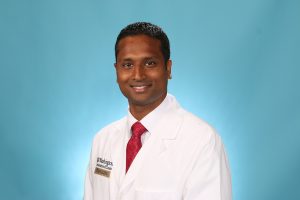
“As a clinician, the worst-case scenario is when I have a patient who not only doesn’t respond to a treatment but who also experiences severe toxicity because of it,” said V Scholar Aadel Chaudhuri, MD, Ph.D., from Washington University School of Medicine in St Louis. “Unfortunately, this can happen with immunotherapy because it can inadvertently cause the immune system to attack healthy tissues. Predicting who will experience this type of severe toxicity is very challenging.”

With funding from the V foundation and other sources, Chaudhuri has made significant progress toward generating a way to identify patients with the highest risk for severe toxicity from immunotherapy. He is also working to find ways to predict treatment response so that one day a simple blood test might provide clinicians the information necessary to select a treatment that will not only get rid of the cancer but also be the least harmful for a specific patient.
Predicting toxicity

To figure out who is most likely to experience toxicity from immunotherapies, Chaudhuri and his colleagues at Washington University, Yale University and Stanford University, used RNA sequencing and mass cytometry to analyze immune cells in blood samples from patients with melanoma. The samples were taken from blood circulating throughout the body during routine laboratory blood draws taken before patients started an immunotherapy known as immune checkpoint blockade.

As described in a recently published Nature Medicine paper, the researchers found that patients who experienced severe toxicity had a higher abundance of certain immune cells – activated CD4 memory T cells – and also a greater diversity of receptors on the T-cells in their blood. Based on these characteristics, the researchers created a composite model for predicting who will develop severe or life-threatening toxicity.

“Although research has shown that patients who experience toxicity also have higher rates of response to immunotherapy, our research suggests that response and toxicity can be immunologically decoupled,” said Chaudhuri. “We think we’ve identified immune underpinnings that are specific to severe toxicity and aren’t significantly associated with treatment response.”

Going in a new direction

Chaudhuri points out that when he started studying immunogenomics and toxicity, he didn’t have a track record in this area. “This would have made it difficult to get NIH funding for this project,” he said. “The V Foundation took a leap of faith that allowed me to pivot my research to an important and interesting area that has enormous potential to improve cancer treatment.”

Chaudhuri and his collaborators are now working with the Melanoma Research Alliance to design a prospective study that will, if successful, translate their published research findings into a precision diagnostic blood test for predicting toxicity before treatment begins.

“We started this line of research with metastatic melanoma because immune checkpoint blockade is a front-line therapy in this disease,” said Chaudhuri. “However, we aim to translate our findings to predict immunotherapy toxicity in other cancer types too.”

Farther down the road, these new insights into the mechanisms responsible for immunotherapy toxicity could help inform the development of drugs that selectively block toxicities from these otherwise highly effective medicines.

Researchers zoom in on cancer cells to find out how they spread

Researchers zoom in on cancer cells to find out how they spread

Head and neck cancers are particularly devastating because they often affect the way a patient looks, as well as crucial functions such as eating and speaking.

“For a long time, head and neck cancers were thought of as resulting from poor choices such as smoking or drinking, which unfortunately led to a dearth of funding in this area,” said V Foundation Scholar Sidharth Puram, M.D., Ph.D., from Washington University School of Medicine. “Now, there’s a growing recognition that studying head and neck cancers is important, and this is creating opportunities to make major strides in understanding these cancers so that better treatments can be developed.”
As a head and neck surgeon, Puram is acutely aware of the ostracization and stigmatization patients with these cancers can experience. This has motivated his quest to better understand how and why head and neck cancers sometimes spread, or metastasize. His work could eventually lead to new therapies or allow doctors to tailor treatments based on whether a tumor is likely to spread.

Looking at what makes cancer spread

The new project expands on findings from a previous study in which Puram and his colleagues analyzed gene expression in head and neck cancers in individual cells, one of the first single-cell analyses of its type to be performed on solid tumors.

“Our previous single-cell work revealed that a subset of cells appears to be particularly important for invasion and metastasis,” said Puram. “These cells undergo what is called a partial epithelial to mesenchymal transition (partial EMT), which means they change in a way that allows them to ultimately spread.”

With the V Foundation funding, the researchers studied these partial EMT cells in detail to find out how they work and what protein markers could be used to identify them. In collaboration with Shannon Stott, Ph.D., and her group at Massachusetts General Hospital, they used a new technology known as multi-spectral imaging that allows simultaneous, high-resolution imaging of up to 15 cell markers across a tissue section that may contain thousands of cells.

“We used this approach to analyze millions of cancer cells from around 10 different tumor samples,” said Puram. “We sought to answer important questions such as how do markers that relate to partial EMT drive metastasis?”

The spectral analysis helped the researchers pinpoint a group of partial EMT markers that appear to play a role in metastasis. It also showed that partial EMT cells might hide from the body’s immune system, perhaps allowing them to avoid destruction and most likely contributing to their ability to spread. A collaboration with Itay Tirosh, Ph.D., and his group at the Weizmann Institute of Science also revealed that cells undergo partial EMT in other types of tumors beyond head and neck cancers.

Working toward better treatment

“In terms of clinical translation, we think that the presence of partial EMT cells could be useful as a readout of cancer aggressiveness, which could allow doctors to dial in the treatment that appropriately matches that aggressiveness,” said Puram. “As we keep learning more about the partial EMT process, it might also be possible to develop a drug that targets partial EMT to make tumors less aggressive or prevent metastasis.”

Puram says that the V Foundation funding made it possible to generate the preliminary data that is critical for securing additional grants. It also helped set up his lab with the tools and personnel necessary for working toward translating their research into the clinic. The funding has already led to a new study in which the researchers will scale up the multi-spectral imaging analysis by examining 200 new tumor samples. This will help them find out whether patients with partial EMT cells are more likely to have poor outcomes or show resistance to treatment, for example.

“Funding for head and neck cancer research is very important because of how much catching up we have to do in our field compared to other tumors,” said Puram.

We’re grateful that the V Foundation supports research in this area. Their funding provided a strong impetus for us to engage in a major line of investigation using imaging-based approaches to study cell-cell interactions in head and neck cancer.
Sidharth Puram, M.D., Ph.D.

Posts navigation

Older posts
Newer posts

Join Our Mailing List

Follow Us
Facebook logo Twitter logo Instagram logo TikTok logo
Language
Get In Touch

The V Foundation for Cancer Research, 14600 Weston Parkway, Cary, NC 27513
Email: [email protected]    Phone: 919-380-9505

Charity Navigator logo Candid GuideStar logo
About Us
  • About Us
  • Our Story
  • Leadership & Collaboration
  • Partners
  • Financial Responsibility
  • Diversity, Equity and Inclusion
  • Careers
  • Cookie Policy
Stories
  • All
  • Inspiration
  • Team Science
  • V Ambassadors
  • Video & Podcasts
  • News
Research
  • Research Overview
  • Award Programs
  • Grant Selection Process
  • Funded Grants
  • Special Funds
  • Researcher Resources
Events
  • Events & Fundraisers
  • Events Calendar
  • Signature Events
  • Run For Team V
  • Fundraise for the V
  • Fundraising Friends
How to Help
  • How to Help
  • Ways to Give
  • Honors and Memorials
Copyright © 2026 The V Foundation for Cancer Research. All rights reserved.
Registered Charity: 818632911 RR0001
Legal Privacy Policy
Manage Consent
To provide the best experiences, we use technologies like cookies to store and/or access device information. Consenting to these technologies will allow us to process data such as browsing behavior or unique IDs on this site. Not consenting or withdrawing consent, may adversely affect certain features and functions.
Functional Always active
The technical storage or access is strictly necessary for the legitimate purpose of enabling the use of a specific service explicitly requested by the subscriber or user, or for the sole purpose of carrying out the transmission of a communication over an electronic communications network.
Preferences
The technical storage or access is necessary for the legitimate purpose of storing preferences that are not requested by the subscriber or user.
Statistics
The technical storage or access that is used exclusively for statistical purposes. The technical storage or access that is used exclusively for anonymous statistical purposes. Without a subpoena, voluntary compliance on the part of your Internet Service Provider, or additional records from a third party, information stored or retrieved for this purpose alone cannot usually be used to identify you.
Marketing
The technical storage or access is required to create user profiles to send advertising, or to track the user on a website or across several websites for similar marketing purposes.
  • Manage options
  • Manage services
  • Manage {vendor_count} vendors
  • Read more about these purposes
View preferences
  • {title}
  • {title}
  • {title}
Manage Consent
To provide the best experiences, we use technologies like cookies to store and/or access device information. Consenting to these technologies will allow us to process data such as browsing behavior or unique IDs on this site. Not consenting or withdrawing consent, may adversely affect certain features and functions.
Functional Always active
The technical storage or access is strictly necessary for the legitimate purpose of enabling the use of a specific service explicitly requested by the subscriber or user, or for the sole purpose of carrying out the transmission of a communication over an electronic communications network.
Preferences
The technical storage or access is necessary for the legitimate purpose of storing preferences that are not requested by the subscriber or user.
Statistics
The technical storage or access that is used exclusively for statistical purposes. The technical storage or access that is used exclusively for anonymous statistical purposes. Without a subpoena, voluntary compliance on the part of your Internet Service Provider, or additional records from a third party, information stored or retrieved for this purpose alone cannot usually be used to identify you.
Marketing
The technical storage or access is required to create user profiles to send advertising, or to track the user on a website or across several websites for similar marketing purposes.
  • Manage options
  • Manage services
  • Manage {vendor_count} vendors
  • Read more about these purposes
View preferences
  • {title}
  • {title}
  • {title}