
Dr. Michele Carbone: “Impossible? I Heard That Before.”
Michele Carbone, M.D., Ph.D., first funded by the V Foundation in a Translational Grant in 2012 and recently awarded an All-Star Grant in April 2026, is a leading expert in mesothelioma and cancer genetics. In this personal note to the V Foundation community, Carbone reflects on the decades-long pursuit to understand mesothelioma, and how innovative, sustained cancer research can transform scientific discovery into prevention, treatment and hope for families. And without the generosity of donors, none of this would be possible.
I visited 3 villages in Cappadocia in Turkey where 50% of the villagers died of mesothelioma, a very aggressive cancer resistant to all therapies. The most devastating cancer epidemic ever described. The villagers asked me why? The American Professor -me-, would certainly know why, instead I had no answers, I felt inadequate, useless, I could not help them. The villagers did not believe that the cause was erionite, a fiber similar to asbestos present in the environment. It did not make sense to me either.
Why would mesothelioma be the only cancer exclusively caused by fibers? All cancers have multiple causes. Why would only 50% of people develop mesothelioma if erionite was so powerful? How did asbestos and erionite cause cancer? Nobody knew. I decided to go to the villages and figure it out. My Chair and everyone else told me not to go. I would have ruined my career, died of mesothelioma, and on top of that it was impossible, villagers only spoke Turkish, I don’t. I went anyway.
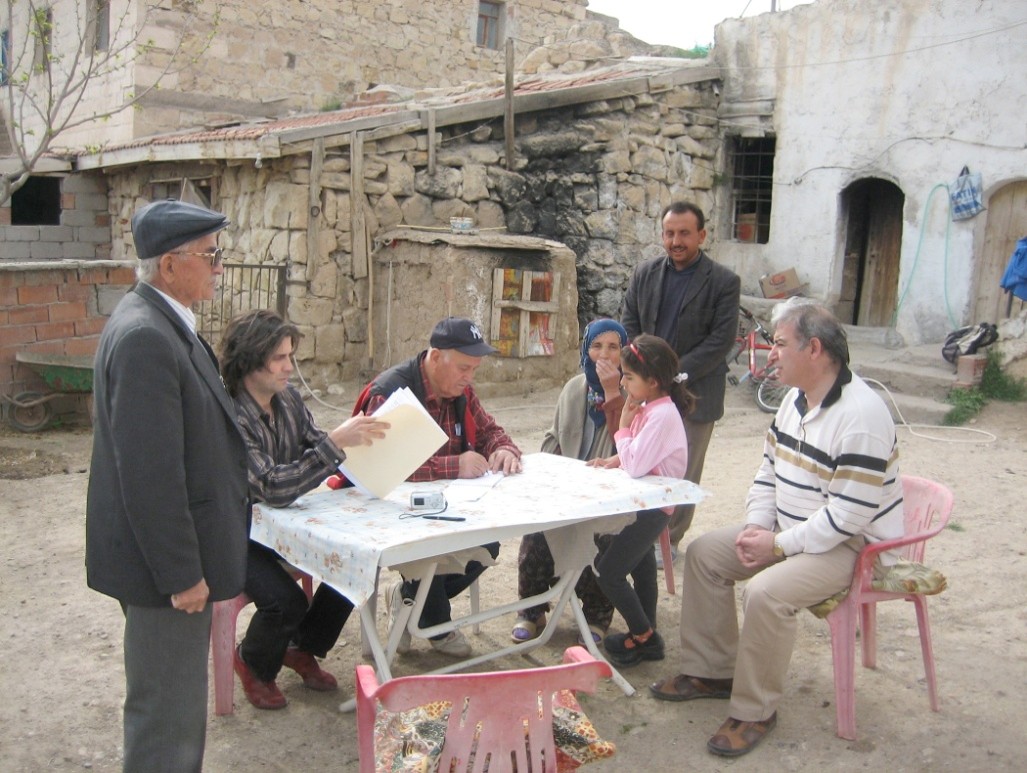
Dr. Carbone and team with patients in Turkey, 2002
28 years later my team and I discovered:
- That susceptibility to fiber carcinogenesis was transmitted from one generation to the next
- The gene responsible, “BAP1”- and more recently we discovered additional genes that predispose to mesothelioma
- How the mutated BAP1 gene causes cancer
- How asbestos and other mineral fibers cause cancer
- How in some families both genetics and fibers interact to cause cancer
- How to find, diagnose and continue to direct the care of families afflicted by familial mesothelioma and by other cancers
- That people that carry BAP1 mutations on one hand develop mesothelioma -and they also can develop other cancers. On the other hand, they can fight cancer invasion for many years. And now we can cure many of them when cancer is diagnosed early on
A cancer once considered uncurable now can be managed. The NIH clinical center in Bethesda has opened 2 clinical trials in response of our studies to treat BAP1-mutant patients, free of charge. The life of these families, how they look at life, has changed. They have a future. Thanks to cancer research.
In Turkey the government built 2 new villages and a clinic, and moved genetically predisposed people away from erionite. In North Dakota the government repaved over 300 miles of road to prevent erionite exposure in those transiting on those roads: including many school buses. These measures saved many from a horrible death, upon my request, because of our research. Impossible? In my experience, when you have facts, politicians listen. We must work with them to translate our discoveries into effective measures to prevent and treat cancer.
Now, with the support of a grant from the V Foundation we are studying why people with BAP1 mutations are able to fight cancer cell invasion. I hope that if we figure this out, we can target the same mechanisms in all cancer patients and make also them able to fight cancer. Impossible? I heard that before, many times.
Thank you for your support. Federal funding for cancer research has steadily declined in this century. At the same time the cost of cancer research has skyrocketed. More and more we depend on private funding to continue our studies to find better ways to prevent and treat cancer.
Michele Carbone, M.D., Ph.D.
William & Ellen Melohn Chair in Cancer Biology and Human Cancer Genetics
Special Advisor on Health and Science to the Governor of Hawaii, Dr. Josh Green
2026 Albert Szent-Györgyi Prize Laureate
Director, Thoracic Oncology
University of Hawaii Cancer Center
Professor, Department of Pathology
John A. Burns School of Medicine
Lab Website: http://www.oakparkpathology.com